






Home › Blog › Rishikesh & Yoga Tourism
Yoga in Rishikesh: What Practising Here Is Actually Like
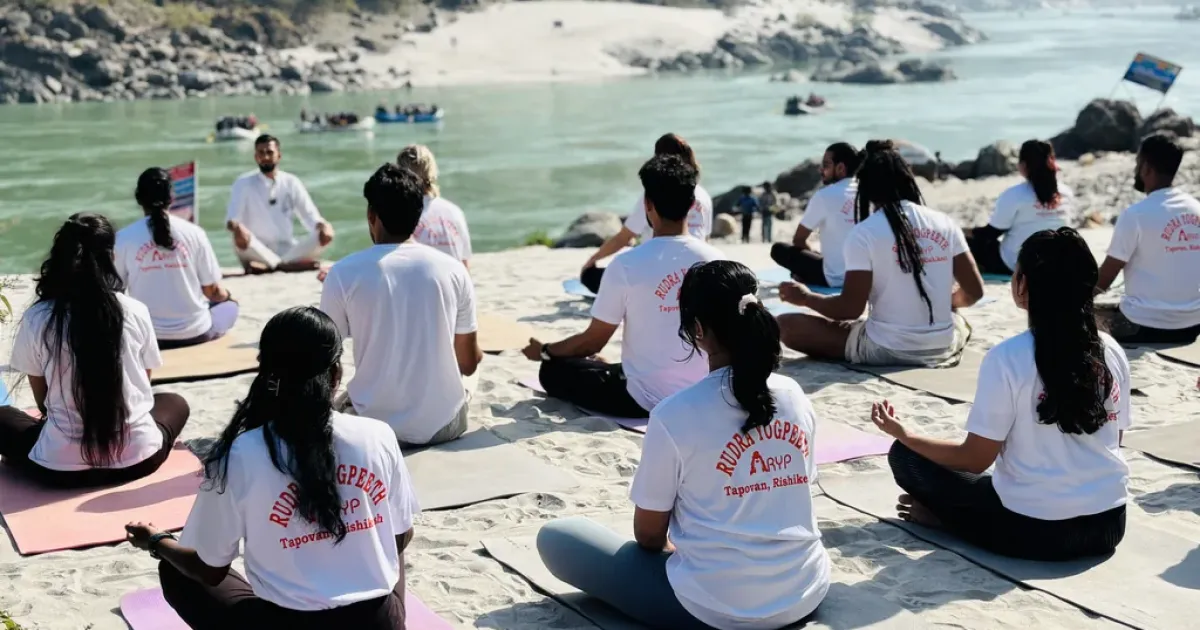
Table of Contents
Most of what is written about yoga in Rishikesh is either a travel listicle by somebody who stayed four days, or a school describing its own course. This is the middle thing: what practising here is actually like, written by people who teach on this riverbank every morning.
We run a school in Upper Tapovan, so we are not neutral. We have tried to be accurate anyway.
Where yoga actually happens
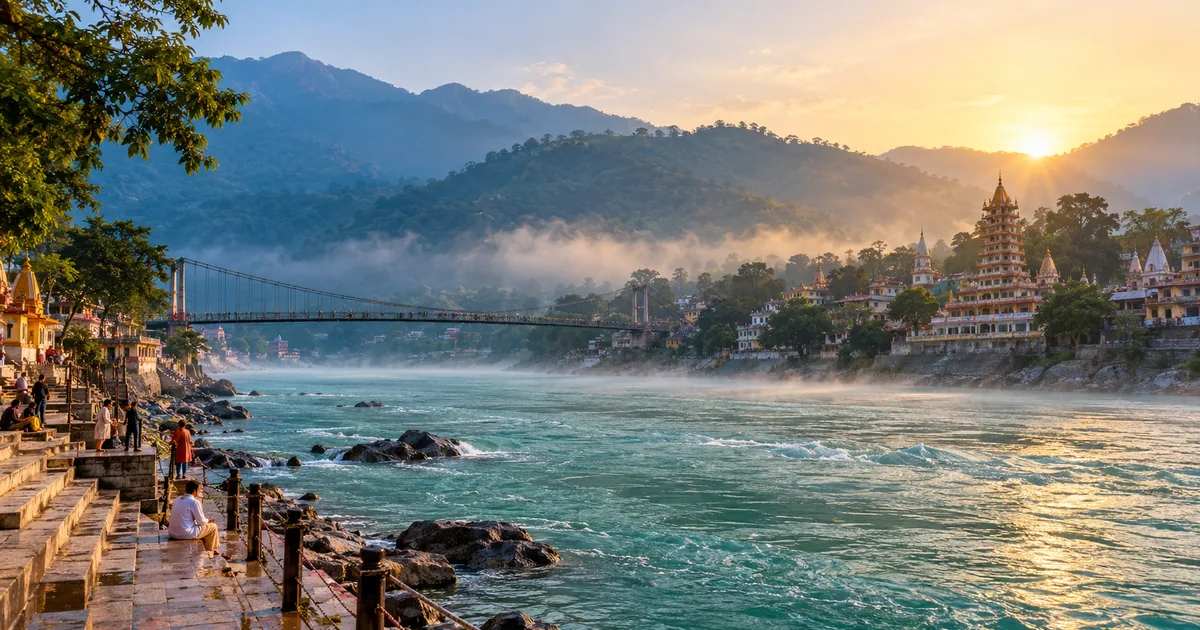
The first thing to understand about yoga in Rishikesh is that “Rishikesh” on a booking page can mean several quite different places. The town spreads along both banks of the Ganga for several kilometres, and where you stay changes your week more than most people expect.
- Tapovan — above Laxman Jhula on the west bank, and where the highest concentration of yoga schools sits. Cafes, bookshops, quiet lanes, and mountain views from most rooftops. Our own school is on Balaknath Street in Upper Tapovan.
- Laxman Jhula — the area around the footbridge of the same name, busy and central, with the river right there. Good for walking everywhere, noisier at night.
- Ram Jhula and Swarg Ashram — the older ashram belt on the east bank. More traditional, more pilgrims, fewer cafes. Parmarth Niketan’s evening Ganga Aarti happens here.
- Rishikesh town proper — the railway station and market end. Practical for errands, not where you want to be practising.
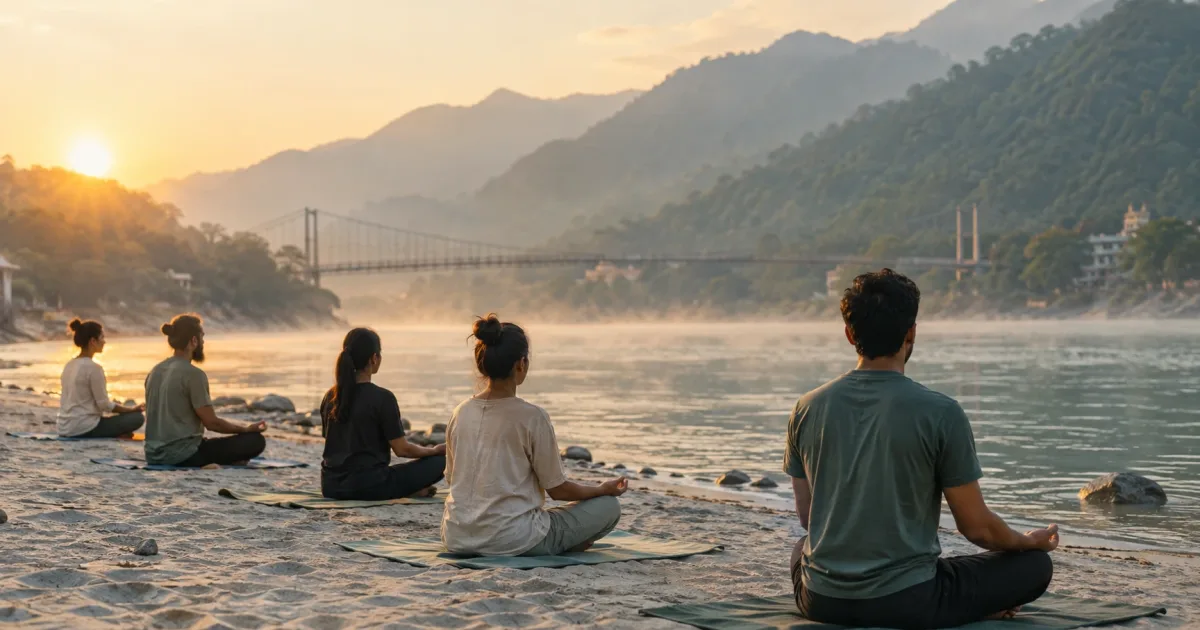
If your mental picture is riverside mornings and pine-covered hills, you are picturing Tapovan and Laxman Jhula. Book accordingly: a room that is technically “in Rishikesh” can still be a long auto ride from the part you came for.
A drop-in class or a course?
You can practise here for a week without committing to anything. Most Rishikesh yoga schools, ours included, run open classes you can walk into, and in season you could do a different style every morning for a fortnight.
What a drop-in gets you is variety and a feel for the place. What it does not get you is progression. Different teacher, different sequence, different level in the room each day — pleasant, but you are being led rather than taught, and after a week you will not be able to put a sequence together yourself.
If you want to arrive, practise, eat well and go home lighter, drop-ins are the right choice and you should not let anyone upsell you. If you want the thing people describe when they say Rishikesh changed how they practise, that comes from a structured course. We wrote about the difference honestly in yoga retreat or teacher training.
The styles you will be offered
Five names account for nearly everything taught as yoga in Rishikesh.
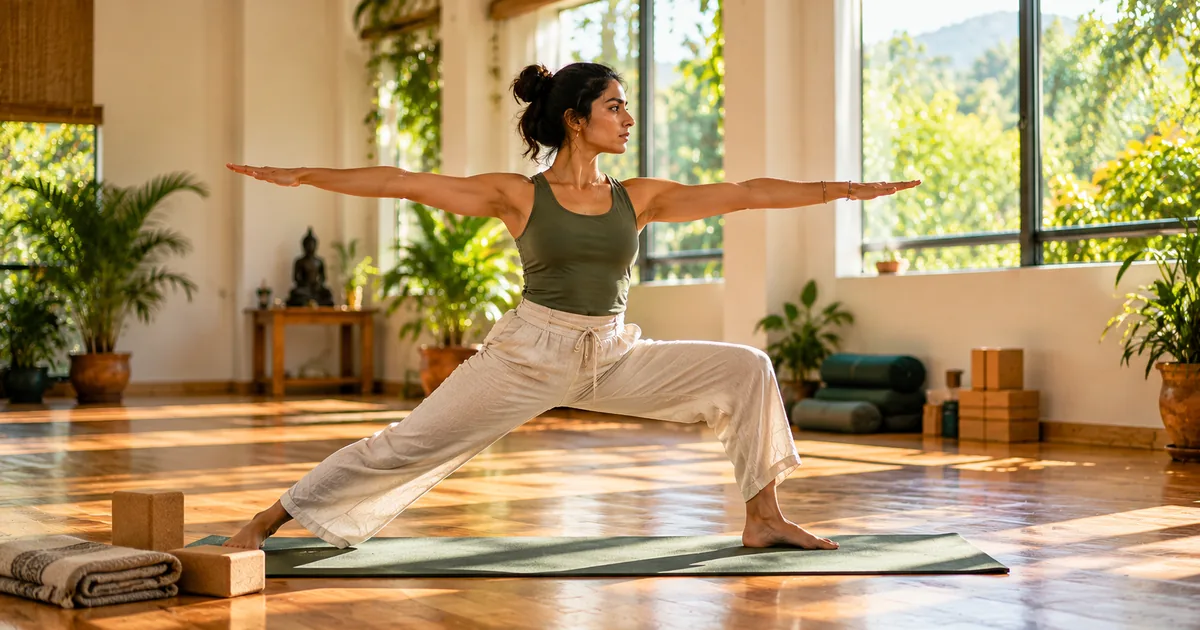
- Hatha — held postures, slower, the foundation most Rishikesh schools build on. If a timetable says “yoga” with no qualifier, expect this.
- Ashtanga — a fixed, demanding sequence practised in the same order each time. Strong and repetitive by design.
- Vinyasa — breath-linked flow, more varied, the style most Western studios teach.
- Kundalini — breath, kriya and mantra rather than shapes. Polarising; try one before you book a week of it.
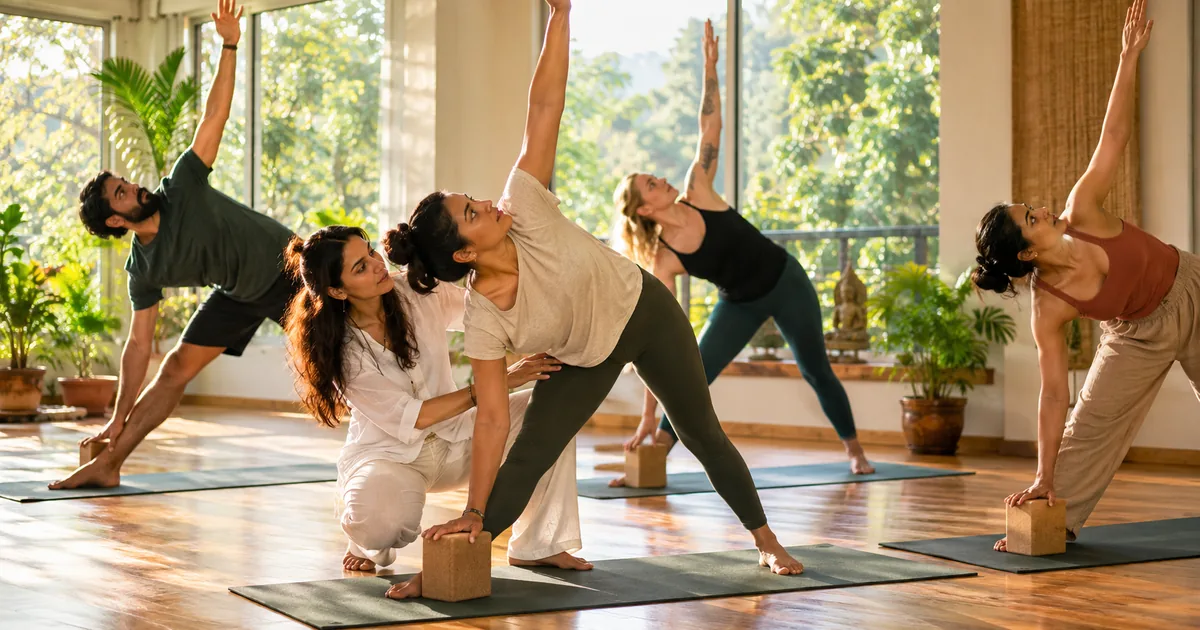
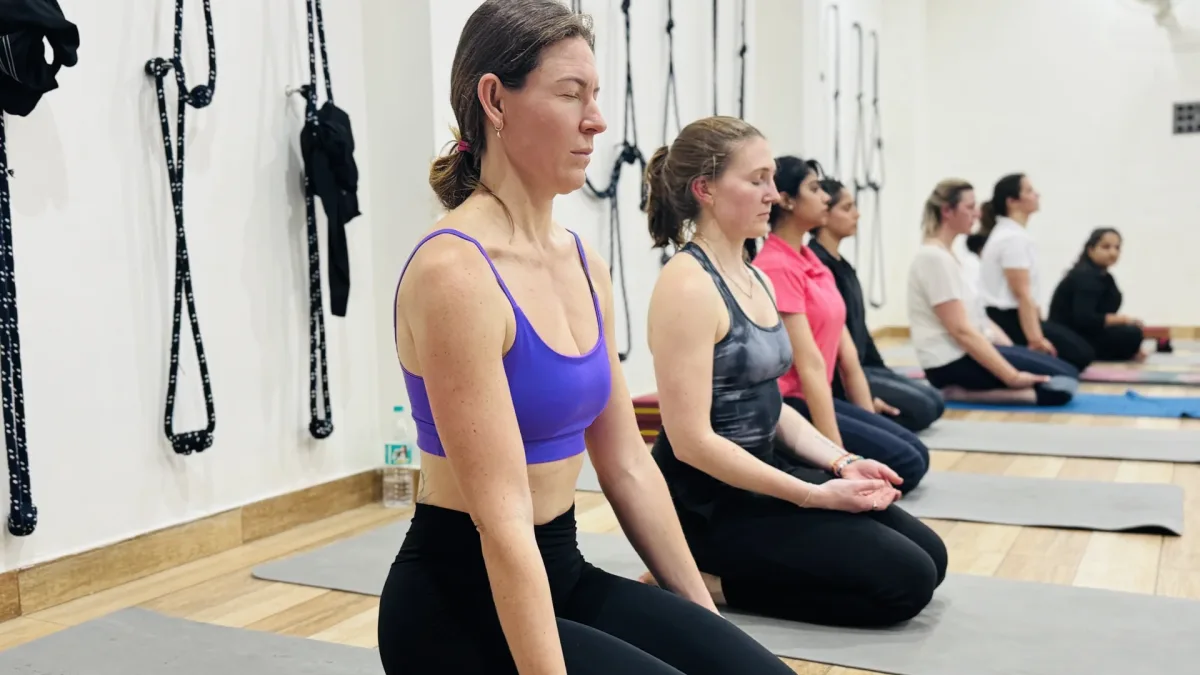
- Iyengar — alignment-led and prop-heavy. Less common here, excellent if you are working around an injury.
Alongside the asana you will meet pranayama, meditation, mantra chanting and the shatkarma cleansing practices. The last of those surprises people — it is a normal part of a morning here, and worth reading about before somebody hands you a neti pot.
What a day of yoga here looks like
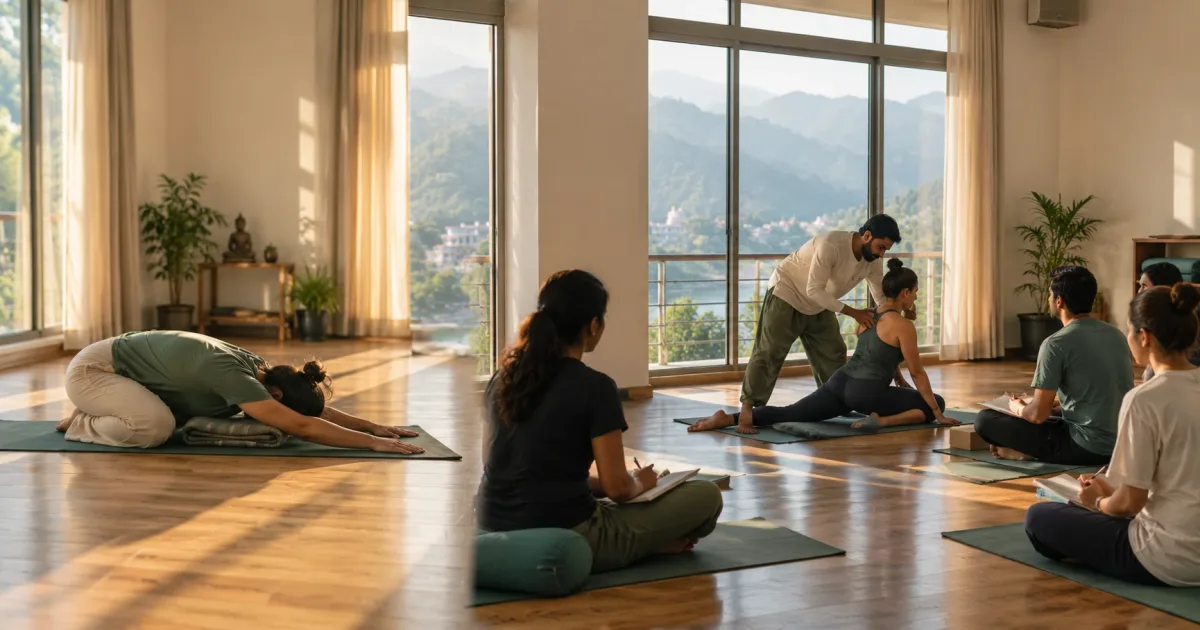
Yoga in Rishikesh runs early. Practice starts before the town wakes and before the heat arrives, which means a 5:30am bell is normal rather than punishing.
On our 200 Hour Yoga Teacher Training the shape of the day is mantra chanting at 6:15, pranayama and shatkriya at 6:30, Hatha from 7:30, then breakfast. Philosophy and anatomy fill the late morning, the afternoon is self-study, and Ashtanga runs 4:30 to 6:00 before meditation and dinner. Lights out at ten.
Even on a casual week the rhythm pulls you along: early practice, late breakfast, a slow afternoon because it is too hot to do much else, and a second practice as the light goes. The town eats early and goes quiet early. There is no nightlife to miss.
When to come — and when not to
Season matters more than the school you pick.
- February to April and September to November — the comfortable months. Clear mornings, warm afternoons, the river at its best. Book early; everyone else has worked this out too.
- April to August — hot, and then wet. Temperatures can reach 40°C and the monsoon reshapes the whole experience. Light cotton clothing, and a tolerance for rain.
- December to February — cold, roughly 15–26°C, and most schools here including ours do not provide room heaters. Bring warm clothes. It is quiet and beautiful if you can take the chill.
Getting here and finding your feet
There is no airport at Rishikesh itself.
- Via Dehradun — Jolly Grant airport is the closest, about half an hour away by road. Easiest arrival by a distance.
- Via Delhi — the usual international gateway. From there, a domestic hop to Dehradun or an overnight train to Haridwar and a short road transfer.
- Transfers — most schools will arrange a pickup from the airport, bus stand or station if you ask in advance. Ours does.
A practical detail people miss: arrive a day before anything starts. The journey from Delhi is longer than it looks on a map, and beginning a 6am practice on no sleep is a poor first morning.
Things that catch people out
- It is a dry, vegetarian town. No alcohol, no meat. Some find it a relief; some find it a month of withdrawal.
- Dress modestly off the mat. This is a pilgrimage town as much as a yoga town, and the two sit side by side.
- The Ganga is fast. This is mountain water moving quickly, not a swimming river. Go in only where locals do, and only at the edges.
- Carry cash. Cards work in the bigger places; the small shops and auto drivers want notes.
- It is not silent. Temple bells, traffic, the river, dogs at night. The peace here is a quality of attention, not an absence of noise.
- Quality varies enormously. Registration and good reviews do not separate schools, because nearly everyone has both.
If you want more than a class
Most people who end up doing a teacher training in Rishikesh did not arrive planning to. They came for a week, found that being led was not the same as understanding, and started asking what the next step was.
The honest answer is a 200 hour course. Not because of the certificate — roughly a third of every batch we teach has no intention of ever teaching a class — but because it is the only format where somebody sits you down and explains the whole system: anatomy under the posture, the philosophy the sequence came from, why a cue that works for one body fails for another.
Ours runs 24 days, monthly, from ₹18,999 all-inclusive — room, three sattvic meals a day, every class, materials and certification, at the same price for every nationality. You can see the full daily schedule and the fourteen subjects on the 200 Hour Yoga Teacher Training in Rishikesh page, or read what a yoga TTC here is really like, hour by hour.
And if a month is more than you have, our 100 hour course runs twelve days, or the seven-day specialist trainings in aerial yoga and sound healing fit inside a holiday.
Come and find us on Balaknath Street if you are already here — or write to us and we will tell you honestly whether what you want is a class, a course, or somewhere else entirely.