






Home › Blog › Yoga Philosophy & Theory
The Five Paths of Yoga (Asana Is the Smallest One)
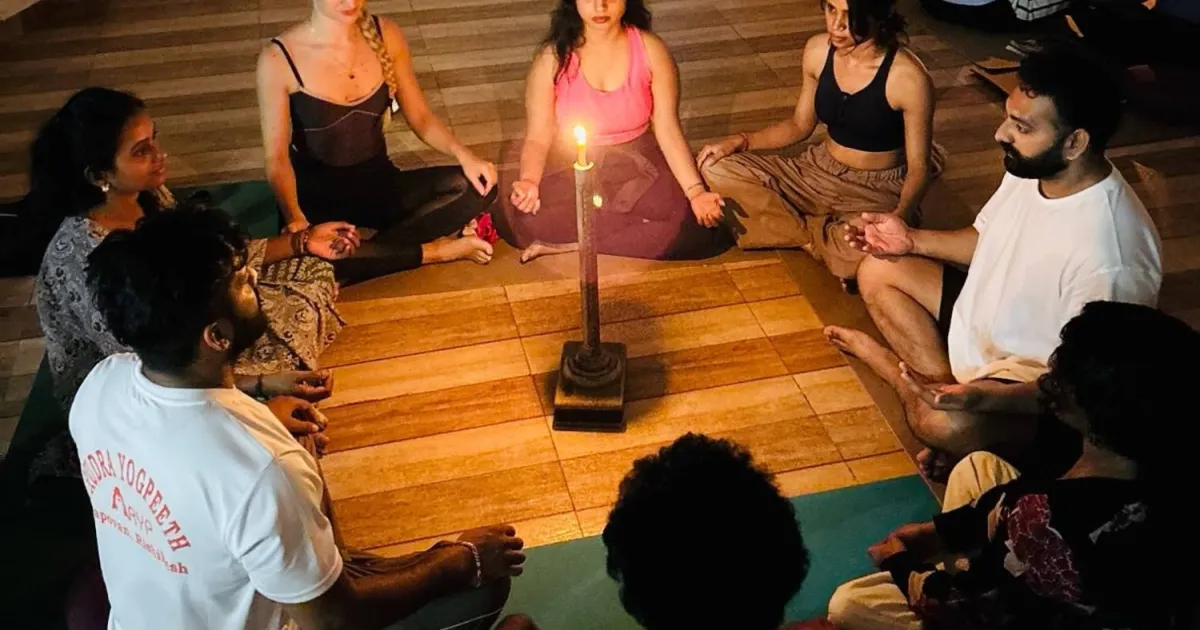
Table of Contents
The five main paths of yoga are usually given as Karma, Bhakti, Jnana, Raja and Hatha — the yoga of action, devotion, knowledge, meditation and the body. The postures almost everyone means by “yoga” are one part of one of those five.
Quick answer: they are not levels and not a sequence. They are five temperaments. Active people are suited to Karma, devotional people to Bhakti, analytical people to Jnana, disciplined people to Raja, and physical people to Hatha. Most practitioners end up mixing them.
The short answer
Yoga is older and wider than the mat. The classical texts describe several routes to the same destination, chosen according to what kind of person is walking them, which is a far more practical idea than it first sounds.
We teach the five on our courses because students arrive thinking yoga is stretching and leave realising asana was the doorway, not the room.
Karma Yoga — the path of action
Yoga through selfless work: doing what is in front of you without clinging to what it gets you. The Bhagavad Gita is its best known source, and Krishna’s instruction to Arjuna is essentially that you have a claim on your actions and none on their results.
In practice it is the least mystical of the five. Cooking for the ashram, teaching a class you are not paid for, caring for someone who cannot repay you. It suits people who think by doing and go restless sitting still.
Bhakti Yoga — the path of devotion
Yoga through love and surrender, expressed in chanting, kirtan, prayer and ritual. It is the warmest and most accessible of the paths, requiring no philosophy and no physical ability.
If you have been to an evening kirtan in Rishikesh and found yourself moved without quite knowing why, you have met Bhakti. It suits emotional, open-hearted people, and it is the path that travels best across cultures because feeling does not need translation.
Jnana Yoga — the path of knowledge
Yoga through enquiry and discrimination: study of the texts, and the steady question of what in you is actually permanent. The Upanishads are its territory, and its method is relentless self-examination rather than belief.
It is considered the most demanding path and the one most often attempted too early. It suits sceptics and analysts — people for whom devotion feels false but a hard question feels like home.
Raja Yoga — the path of meditation
The “royal path”, systematised in Patanjali’s Yoga Sutras as eight limbs: yama, niyama, asana, pranayama, pratyahara, dharana, dhyana and samadhi. It is a training manual for the mind, and the structure most teacher trainings are built on.
Note where asana sits: third of eight, and in the Sutras it means little more than a steady comfortable seat for meditation. The entire modern posture tradition grew from that one limb.
Hatha Yoga — the path of the body
Yoga through physical discipline: asana, pranayama, mudra, bandha and the cleansing practices. Its classical purpose is preparatory — a body and nervous system steady enough to sit for long meditation without distraction.
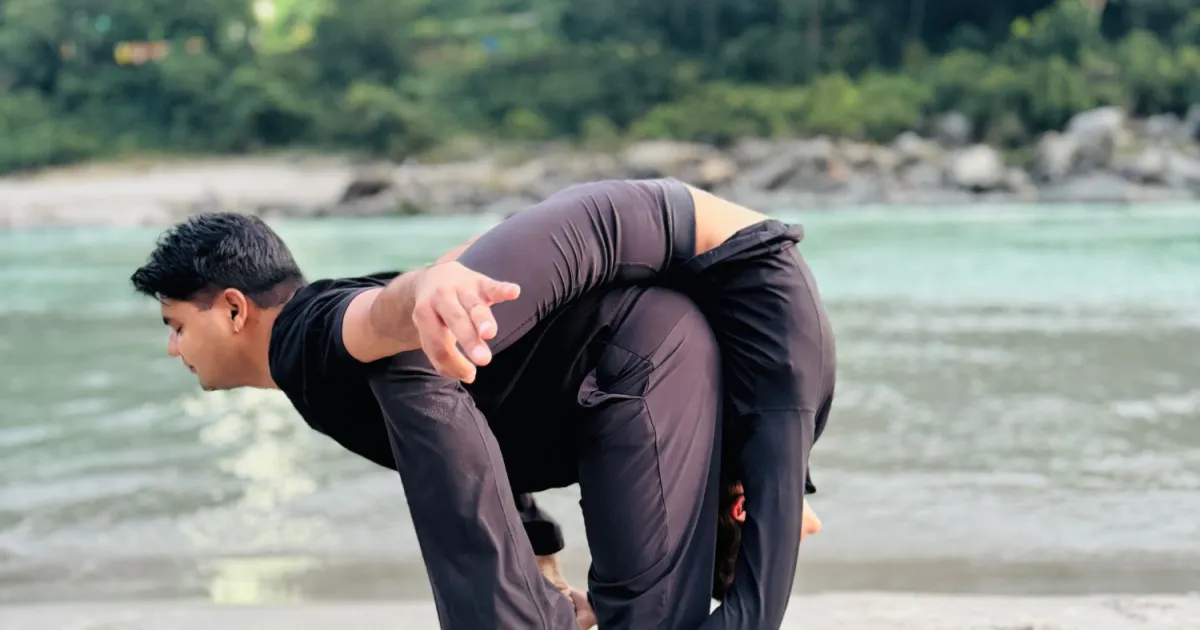
Nearly every modern style, Vinyasa and Ashtanga included, descends from this path. If you want to know what it feels like day to day, we have described what practising in Rishikesh is actually like.
Why the lists disagree
If you search this question you will find four paths on some sites and five or six on others. The disagreement is real and worth understanding rather than papering over.
- The classical four are Karma, Bhakti, Jnana and Raja. This is the grouping the Gita supports most directly.
- Hatha is commonly added as a fifth, which is how most schools teach it, because it is a distinct discipline with its own texts.
- Some lists use Tantra as the fifth instead, or add it as a sixth.
Nobody is wrong. These are maps of the same territory drawn by different hands, and treating any one list as the authorised version misses the point of having maps.
Which path suits you
- You think by doing, and sitting still irritates you — Karma.
- Music and ritual move you more than argument — Bhakti.
- You want to be convinced, not comforted — Jnana.
- You want a method with steps and you will follow them — Raja.
- You arrived through the body and want to go further in — Hatha.
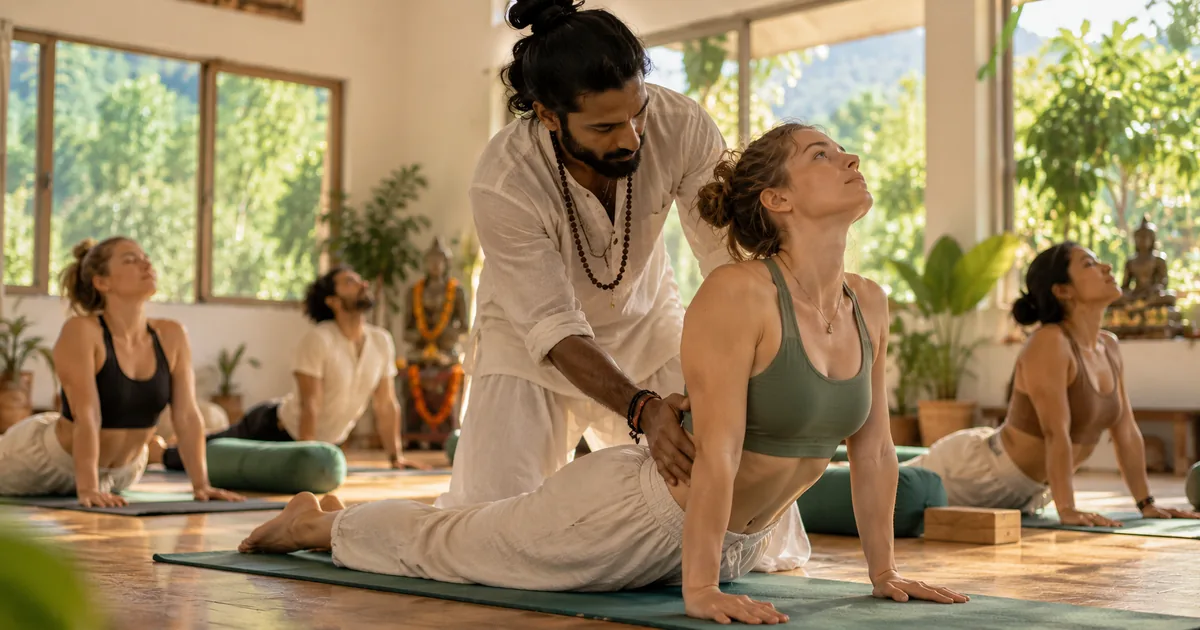
In a residential course you touch all five in a day without labelling them: seva in the kitchen, chanting at dawn, philosophy after breakfast, meditation in the evening, asana twice. The categories are a way of noticing which one you reach for when nobody is directing you.
Bottom line
Five paths, one destination, chosen by temperament rather than rank. Asana belongs to one of them and occupies one limb of eight within another. Knowing that changes how you practise, usually for the better.
Philosophy is one of the fourteen subjects on our 200 Hour Yoga Teacher Training in Rishikesh, taught by a specialist alongside asana, pranayama and meditation — 24 days, ₹18,999 all-inclusive, same fee for every nationality. Ask us about the syllabus.
Frequently Asked Questions
What are the five main paths of yoga?
They are usually given as Karma yoga, the path of selfless action; Bhakti yoga, the path of devotion; Jnana yoga, the path of knowledge and self-enquiry; Raja yoga, the path of meditation set out in Patanjali's eight limbs; and Hatha yoga, the path of physical discipline. They are not levels or a sequence but five routes suited to different temperaments.
Which path of yoga is best for beginners?
Most beginners start with Hatha, because the body is the most accessible entry point and asana gives something concrete to practise. Bhakti is equally accessible and needs no physical ability at all. Jnana is generally considered the most demanding and the one most often attempted too early.
Is Hatha yoga one of the five paths of yoga?
In most modern lists, yes. The classical grouping is four paths, Karma, Bhakti, Jnana and Raja, with Hatha commonly added as a fifth because it has its own texts and discipline. Some lists use Tantra as the fifth instead, which is why the counts differ between sources.
What religion is yoga connected to?
Yoga developed within the religious and philosophical traditions of the Indian subcontinent, principally Hinduism, with shared development in Buddhism and Jainism. Practising yoga does not require belonging to any religion, and students of every faith and none train at ashrams in Rishikesh.