






Home › Blog › Yoga Teacher Training
Yoga TTC in Rishikesh: The Real Timetable, Hour by Hour
Table of Contents
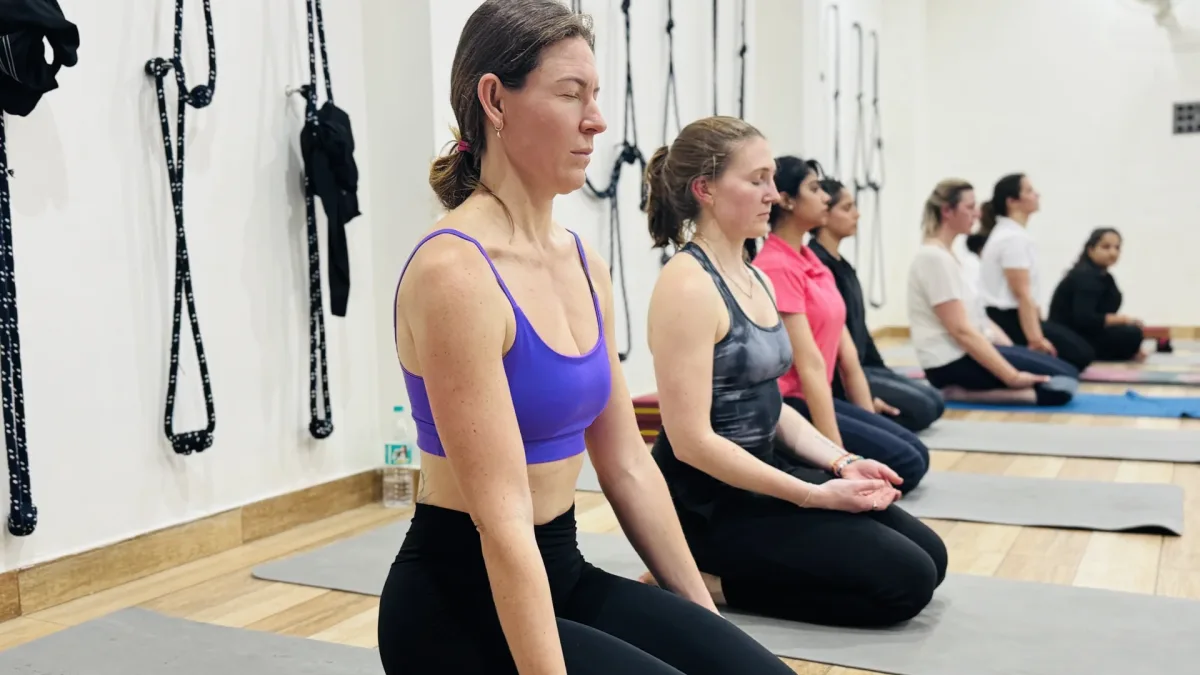
Search for a yoga TTC in Rishikesh and you will find a hundred pages of the same four photographs and the word “transformative”. Almost none of them tell you the one thing worth knowing before you commit a month and a flight: what you will actually be doing, from the bell in the morning to lights out.
So here is ours, in full. We teach this course every month in Upper Tapovan, and the timetable below is the real one.
What TTC means, and what it does not
TTC is simply Teacher Training Course. A yoga TTC in Rishikesh almost always means a residential, Yoga Alliance registered programme — most commonly 200 hours over about three and a half weeks.
What it is not is a retreat with a certificate stapled on. The difference is not difficulty; it is that on a retreat you are led through practice, and on a training somebody explains it. Anatomy under the posture, the philosophy the sequence came from, how to adjust a body that is not shaped like yours.
And the part most people get wrong: it is not only for people who want to teach. More on that below.
The day, hour by hour
This is the actual daily schedule of our 200 Hour Yoga Teacher Training in Rishikesh, not an illustrative example.
- 5:30 am — morning bell
- 6:15 – 6:30 — mantra chanting
- 6:30 – 7:30 — shatkriya and pranayama
- 7:30 – 9:00 — Hatha yoga
- 9:00 – 10:00 — breakfast and free time
- 10:00 – 11:00 — yoga philosophy
- 11:00 – 12:00 — anatomy and physiology
- 12:30 – 1:00 — karma yoga
- 1:00 – 2:30 — lunch
- 2:30 – 4:00 — self-study and self-practice
- 4:00 – 4:30 — tea
- 4:30 – 6:00 — Ashtanga
- 6:10 – 7:00 — relaxation and meditation
- 7:00 – 8:30 — dinner
- 8:00 – 9:00 — self-study and free time
- 10:00 pm — lights off
That is eight to ten hours of structured teaching a day, with real breaks built in rather than implied. Timings shift a little with the season — sunrise moves, and so does the first practice.
Two things people notice in the first week. The 5:30 bell is far easier than it sounds once the town has you on its rhythm, because nothing happens in the evening to keep you up. And the long afternoon gap is not a gift — it is when the reading and the practicum preparation actually get done.
The fourteen subjects
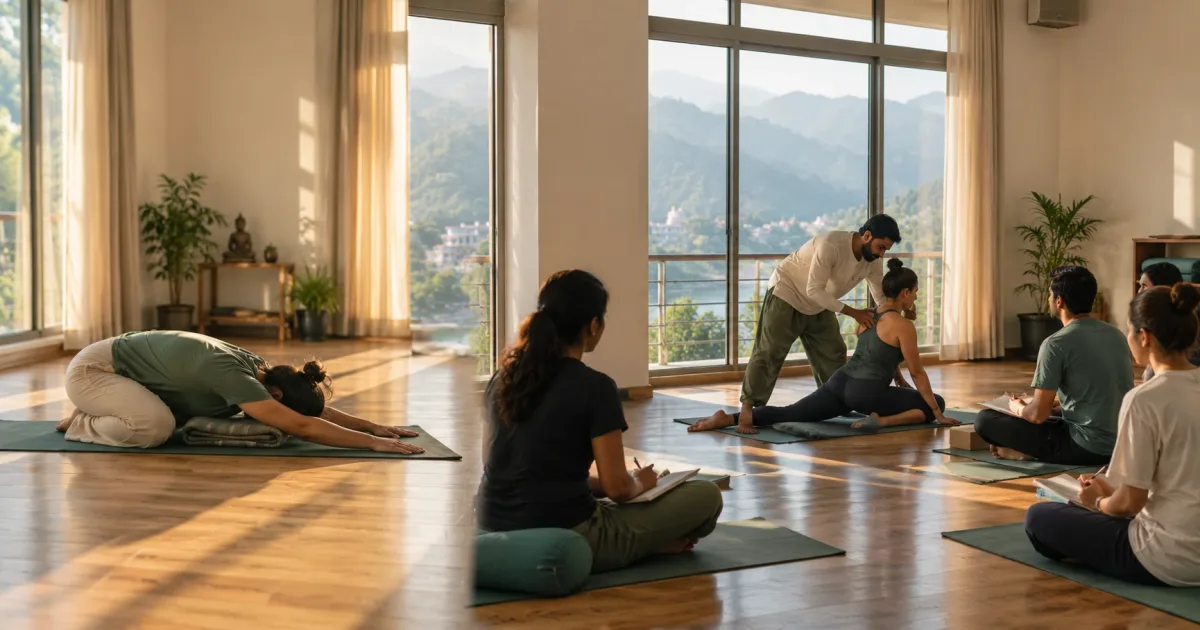
A 200 hour yoga TTC syllabus is not three weeks of asana. Ours covers fourteen core subjects, each taught as its own module by a specialist in it: asana, pranayama, meditation, philosophy, anatomy, mantra chanting, mudra, bandha, shatkarma, yoga nidra, Ayurveda, yoga therapy, teaching methodology and alignment.
The specialist-per-subject part matters more than it sounds. The practical reason a training here can staff an anatomy teacher who only teaches anatomy, at a price that would be impossible in Berlin or Los Angeles, is that Rishikesh has more experienced yoga teachers per square kilometre than anywhere else on earth. That is the genuine argument for coming here, and it has nothing to do with the scenery.
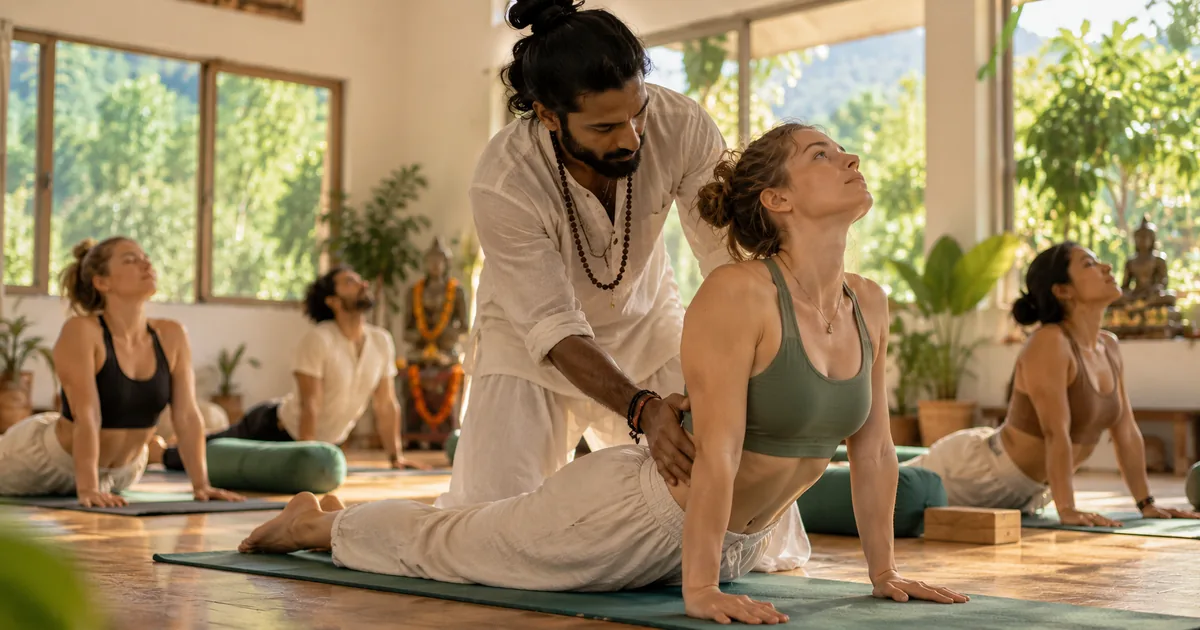
Teaching methodology is the subject that separates a training from a long retreat. Sequencing, cueing, hands-on adjustment, holding a room with mixed levels in it — and a practicum where you teach, and are corrected.
How a month actually feels
Nobody warns you that the shape of the month is predictable.
The first few days are mostly logistics and soreness. New bodies, new schedule, muscles you had forgotten about, and the quiet realisation that your alignment is not what you believed it was.
Around the second week most people hit a flat patch. The novelty has gone, the philosophy readings are stacking up, home feels far away and the practice has stopped producing obvious gains. This is normal and it passes. It is also when the people who booked a “yoga holiday” realise they booked a course.
By the third week something clicks. The sequences stop being lists to remember and start being things you understand. You begin watching other students’ bodies instead of your own, which is the first real sign of a teacher.
The last days are practicum, assessment and a graduation ceremony that finishes around 7pm. Plan your departure for the day after, not the same evening.
Who turns up — and it is not who you think
Roughly a third of every batch has no intention of ever teaching a class.
They come because the 200 hour is the only format in which the whole system gets explained, and because three and a half weeks of structure does something a week of being led cannot. The certificate is a by-product; nobody checks whether you use it. What you leave with is a practice you understand well enough to keep doing alone, at home, in January, with no teacher in the room.
The rest are a mix: people who already teach and never formally certified, studio teachers coming back for depth, and career-changers. Ages run wide. You do not need advanced asana — a headstand is not an entry requirement, a reasonably consistent practice is.
The parts people find hard
If a school tells you a TTC is relaxing, they are selling.
- The schedule is genuinely full. Eight to ten hours a day, most days, for over three weeks.
- Philosophy is a real subject here, not a garnish. There is reading, and there are ideas you may disagree with — you are arguing with the real thing, taught by people who were taught it.
- Shared rooms and shared bathrooms at the lower fee tiers. Most friendships on a course start this way, but go in knowing it.
- Dry, vegetarian, early-to-bed. No alcohol, no meat, no nightlife.
- Winter is cold. December to February runs 15–26°C and we do not provide room heaters. Bring warm clothes.
- Teaching in front of your peers is the thing most people dread and most people name afterwards as the part that changed them.
Dates, fees and arriving
Our yoga TTC in Rishikesh starts on the 1st of every month and runs 24 days. The fee is all-inclusive and identical for every nationality — no separate Indian and international pricing, which is worth checking elsewhere in this town.
- ₹18,999 — dormitory
- ₹25,999 — two-sharing room
- ₹44,999 — private room
That covers tuition, your room for the full 24 days, three sattvic vegetarian meals a day, course materials, the excursions in the calendar and your certificate. Nothing is added after you arrive.
Arrive a day before — the course opens at 10am on day one with a yoga ritual, and the graduation on the final day finishes around 7pm, so plan to leave the day after. Fly into Dehradun’s Jolly Grant airport (about half an hour away by road) or into Delhi and take the domestic hop or the overnight train to Haridwar. Tell us your arrival details and we will arrange the pickup.
What the fee does not cover — flights, visa, insurance, Yoga Alliance registration — usually adds up to more than the course itself. We set the whole budget out in what a yoga teacher training in Rishikesh actually costs.
Before you pay anyone
Ask any school in this town these four questions, in writing, and compare the answers rather than the photographs.
- How many students in this batch, and how many teachers? A school that will not give you a number has given you your answer. We cap ours at 15–20.
- Is anything charged after I arrive? You want a clear no, in writing.
- Is the fee the same for every nationality?
- What happens if I have to cancel? Ask before the deposit, never after.
If you are still deciding between course lengths, 200, 300 or 500 hour? sets out which is which — the short version is that the 200 is the only real starting point. And if you want the questions that separate a good school from a well-marketed one, they are in why most yoga instructor training in India fails you.
Our next batch starts on the 1st. Write to us with where your practice is and what you want afterwards, and we will tell you straight whether this course fits — including when it does not.