






Home › Blog › Yoga Teacher Training
Yoga Retreat or Teacher Training? Most People Choose Wrong
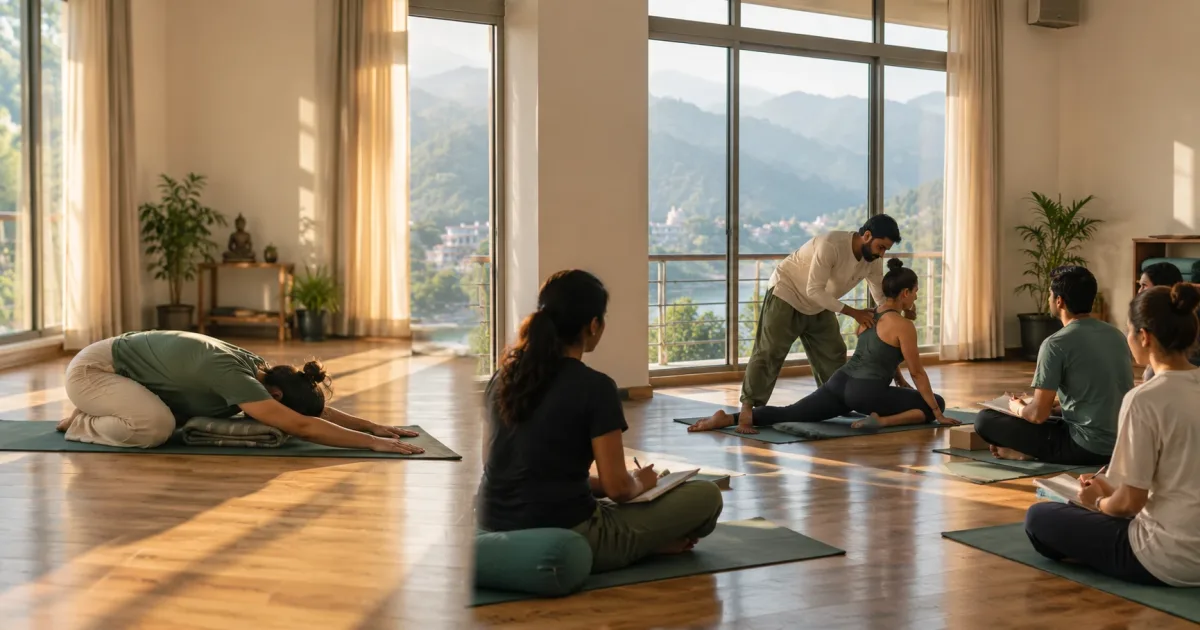
Table of Contents
Almost everyone who writes to us has already had this argument with themselves. A yoga retreat sounds restorative and manageable. A yoga teacher training sounds serious, long, and faintly presumptuous if you have no intention of ever teaching.
That second assumption is the expensive one, and it is wrong often enough that it is worth taking apart.
The real difference — it is not difficulty
People imagine the difference is intensity: a retreat is gentle, a training is hard. Sometimes true, but it is not the actual distinction.
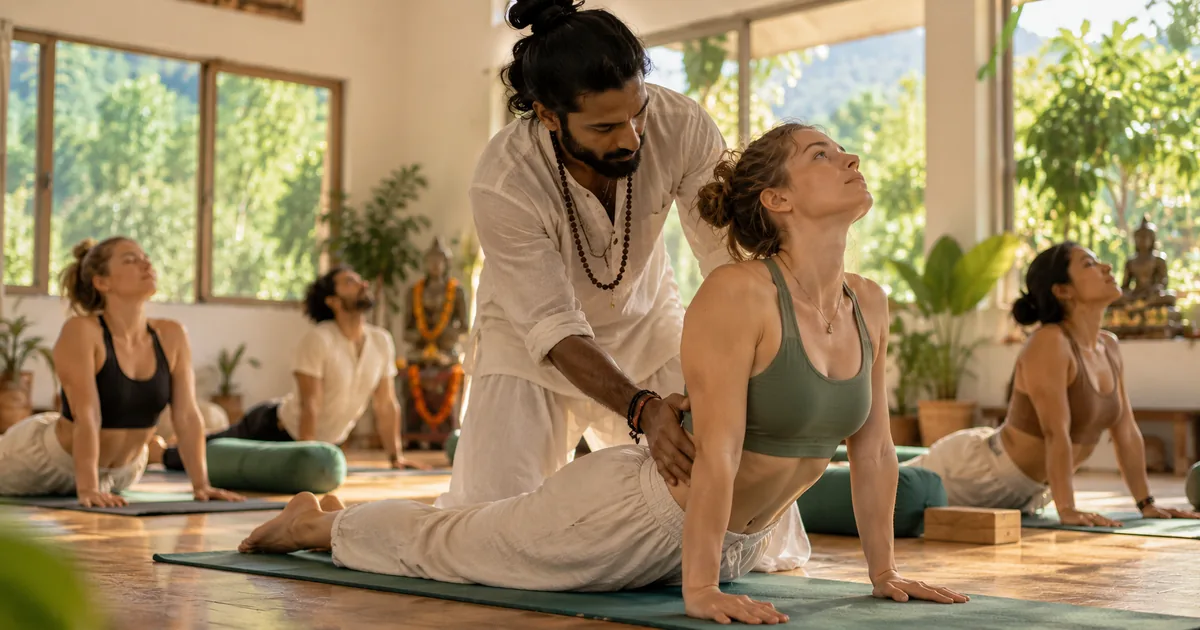
The real difference is whether anyone explains why. On a retreat you are led through practice. On a training you are taught what the practice is doing — the anatomy underneath the posture, the philosophy the sequence came from, why one cue works for one body and fails for another.
You can be led through a beautiful week and come home with very little you can repeat on your own. That is the gap people feel afterwards and struggle to name.
The myth that costs people a trip
Here is the thing nobody tells you: a teacher training is not only for people who want to teach.
Roughly a third of every batch we run has no plan to teach a class in their life. They come because it is the only format in which somebody sits you down and explains the whole system — and because 24 days of structure does something that seven days of being led cannot.
The certificate at the end is a by-product. Nobody checks whether you use it. What you actually leave with is a practice you understand well enough to keep doing alone, at home, in January, with no teacher in the room. That is the thing worth paying for.
You do not need advanced asana to begin, either. A headstand is not an entry requirement — a reasonably consistent practice is.
When a retreat is the right answer
We are a training school and we will still say it plainly: sometimes a retreat is the better choice.
- You are exhausted rather than curious. If what you need is sleep, quiet and no obligations, a structured 6am-to-9pm schedule is the wrong medicine.
- You are travelling with someone who does not practise. A training is not a holiday you can share.
- You have a week and want rest, not study. Perfectly reasonable, and worth booking honestly rather than booking a training and resenting it.
- You are recovering from injury or illness and need gentleness rather than a timetable.
When a training is the right answer
- You keep starting and stopping at home. Structure is the entire point, and it is the thing a retreat does not give you.
- You want to understand, not just feel. If “why does this pose do that” is a question you ask, you want the training.
- You might teach one day, even vaguely, even later. Doing it now is far cheaper than coming back for it.
- You want the change to outlast the flight home. This is the one people underestimate most.
Our 200 Hour Yoga Teacher Training in Rishikesh runs 24 days, monthly, from ₹18,999 all-inclusive. It is the foundation course and the right starting point for everyone, whatever they plan to do afterwards. If you are weighing it against the longer courses, 200, 300 or 500 hour? sets out which is which.
If you only have a week
This is the most common situation, and it is where the retreat-or-training question usually gets decided by the calendar rather than by preference.
A week is enough for a genuine immersion — it is not enough for a 200 hour course. Two routes are worth knowing about:
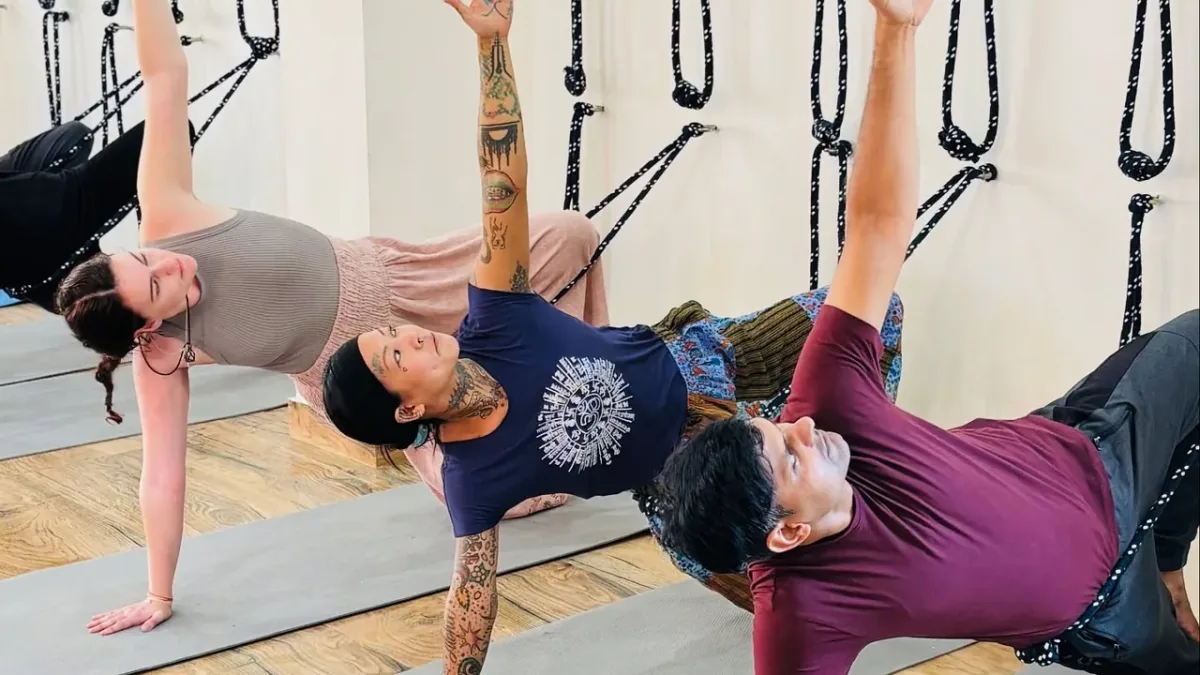
- A seven-day specialist training. Residential, from ₹17,999, and taught rather than merely led: aerial yoga, prenatal and postnatal, or sound healing. This is the closest thing to a retreat that still sends you home with something.
- The 100 hour course — twelve days. Longer than a week, shorter than a month, and it does not shorten the 200 hour if you return for it later.
The money, side by side
The fees are closer than people expect, which is why the decision should be about what you want rather than what you can afford.
- Seven-day specialist training — from ₹17,999, all-inclusive
- 100 hour, twelve days — fee on request, small batches
- 200 hour, 24 days — from ₹18,999, all-inclusive
Read that again: a full month of training costs roughly what a week does. Once flights and visa are in the total — and they usually outweigh the course fee, as we showed in what a training in Rishikesh actually costs — the longer option is often the better value by a wide margin.
Every fee here includes your room, three sattvic vegetarian meals a day, materials and certification, and it is the same for every nationality.
Deciding in two minutes
- You want to rest → book a retreat, and book it honestly.
- You want to understand your practice → the 200 hour, whether or not you ever teach.
- You have one week and want depth → a seven-day specialist training.
- You have twelve days → the 100 hour.
- You cannot decide → tell us where your practice is and what you want afterwards. We will say which fits, including when the answer is “a retreat somewhere else”.
Before you book anything in this town, the seven questions in booking a yoga retreat in Rishikesh are worth five minutes. Or just ask us directly — no sales pressure, and a straight answer.