






Home › Blog › Yoga Poses & Asanas
The Yoga Asanas Everyone Skips (And What It Costs)
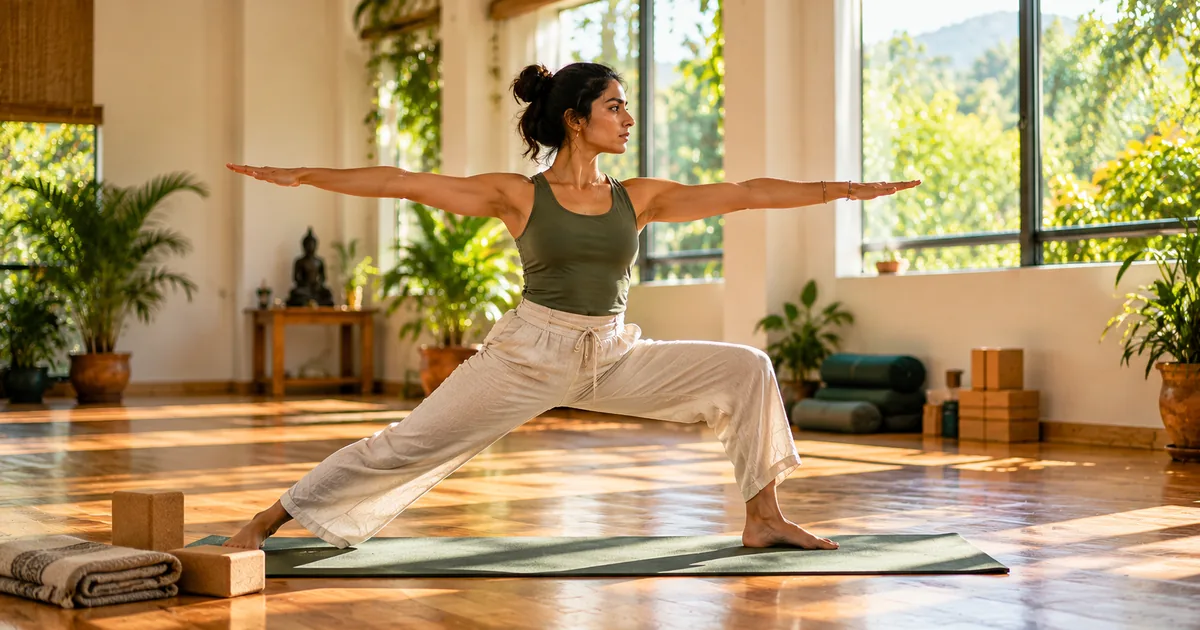
Table of Contents
Watch any drop-in class and you will see the same thing: people work hard at the postures that look impressive and hurry through the ones that build everything else. The asanas that get skipped are the boring ones — and they are the ones doing the work.
This is a practical guide to yoga asanas for strength, flexibility and inner calm: what each group actually trains, what people get wrong in them, and how to put them together.
Asanas that build real strength
Yoga strength is isometric — holding a shape while the breath stays even. It is unglamorous and it transfers to everything.
- Virabhadrasana II (Warrior II) — legs, glutes, shoulders. Commonly rushed. Hold it for five slow breaths and it stops being a transition.
- Utkatasana (Chair Pose) — quadriceps and the whole back line. Most people lean too far forward; the weight belongs in the heels.
- Phalakasana (Plank) — the core brace underneath every arm balance you will ever attempt.
- Chaturanga Dandasana — the most-rushed posture in modern yoga, and the one that injures the most shoulders. Elbows in, not out.
- Setu Bandhasana (Bridge) — glutes and the back of the body, which sitting all day switches off.
The common mistake: flowing through at one speed. Strength comes from holding, not from passing through.
Asanas that actually improve flexibility
Flexibility is the slowest thing yoga changes and the thing people expect fastest. Months, not weeks — and forcing it sets you back.
- Adho Mukha Svanasana (Downward Dog) — hamstrings, calves, shoulders. Bend the knees. Almost everyone should bend the knees.
- Paschimottanasana (Seated Forward Fold) — lengthen the spine first, fold second. Rounding from the lower back is how people hurt themselves here.
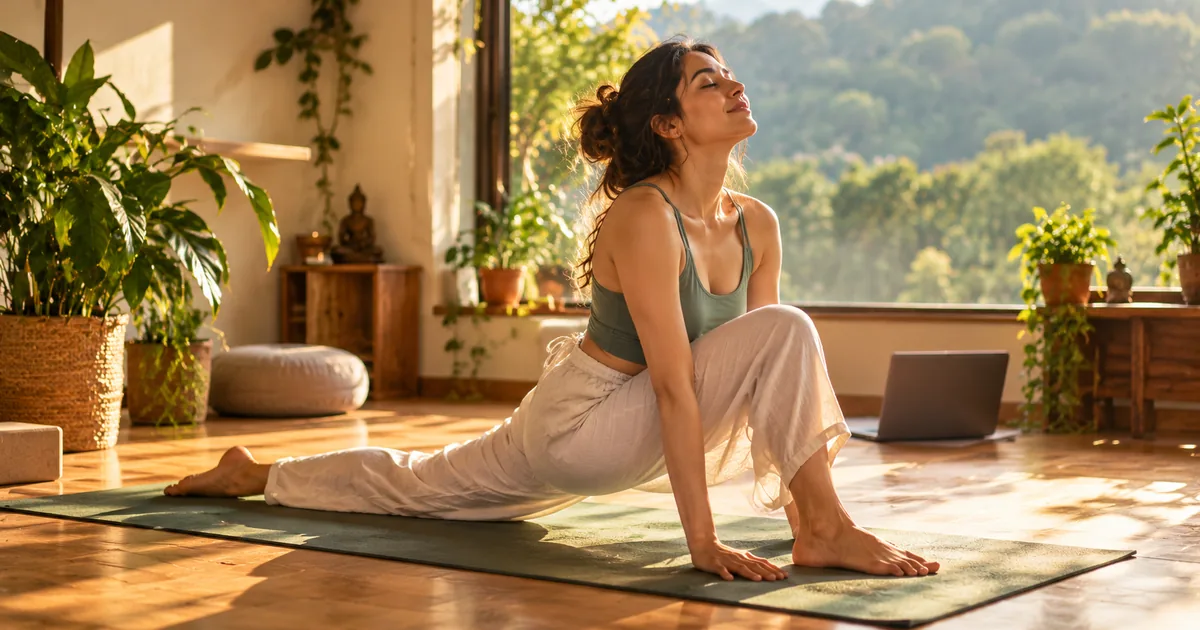
- Anjaneyasana (Low Lunge) — the hip flexors, which a desk shortens more than anything else.
- Bhujangasana (Cobra) — opens the chest that screens close. Low and long beats high and crunched.
- Supta Matsyendrasana (Supine Twist) — spine and lower back, and it costs nothing.
The common mistake: chasing depth. A posture held at seventy per cent with a steady breath does more than the same posture at full range with the breath held.
Asanas for inner calm
These are the ones that get cut when a class runs late, which is precisely backwards — they are where the nervous system actually changes.
- Balasana (Child's Pose) — the reset. Available at any point in any class.
- Viparita Karani (Legs up the Wall) — ten minutes after a long day does more than most people believe.
- Sukhasana with slow breathing — the seat for pranayama and meditation.
- Savasana — the hardest posture in yoga, and the one most often skipped. Not optional.
If you only take one thing from this article: do not leave before savasana.
A 20-minute sequence that covers all three
Not a class — a daily minimum that actually fits into a life.
- Tadasana, two minutes — just breathing and finding your weight
- Cat–Cow, ten rounds with the breath
- Downward Dog, five breaths — knees bent
- Low Lunge, both sides, five breaths each
- Warrior II, both sides, five breaths each
- Chair Pose, five breaths
- Cobra, three rounds
- Seated Forward Fold, ten breaths
- Supine Twist, both sides
- Savasana, five minutes minimum
Three times a week beats seven. People who go daily from a standing start usually stop within a fortnight — which we wrote about in why most beginners quit in three weeks.
Four mistakes that hold almost everyone back
These come up in nearly every batch, regardless of experience.
- Holding the breath in difficult postures. The clearest signal you have gone past your working range. The posture is only worth what the breath can hold.
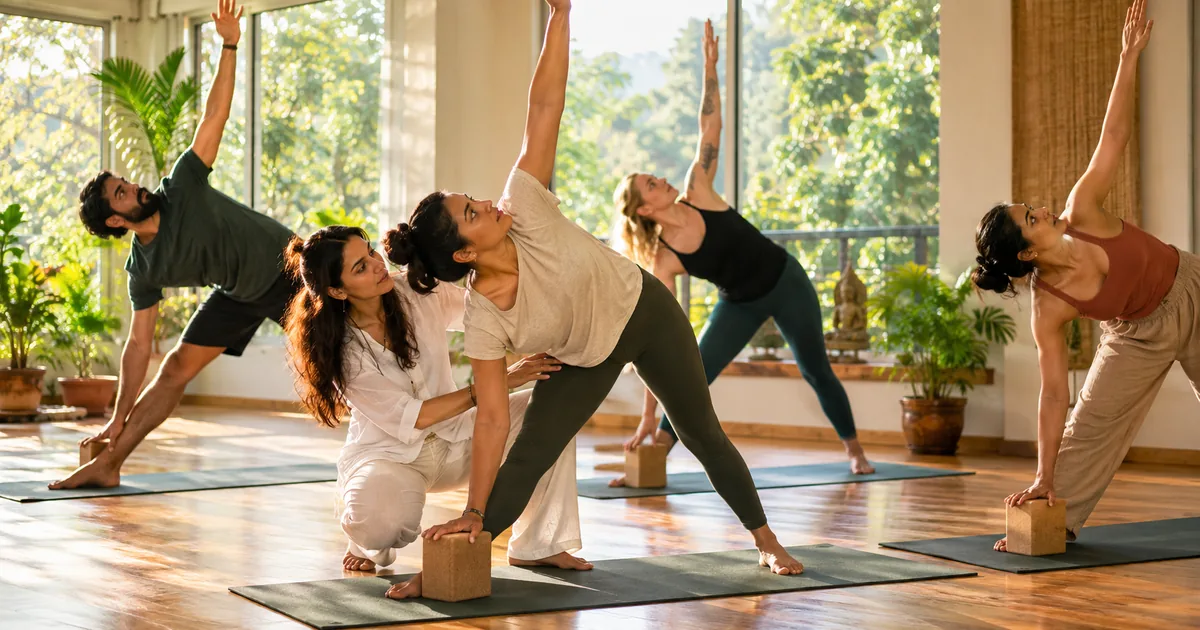
- Treating props as failure. A block under the hand in triangle lets the chest open properly. Without it you simply practise a collapse repeatedly.
- Skipping the warm-up and the savasana. The two ends of a class are the parts that make the middle safe and useful.
- Comparing across the room. Hip structure differs enough between people that two bodies will never make the same shape in a lunge. The depth you can reach is not the measure of anything.
Learning these properly
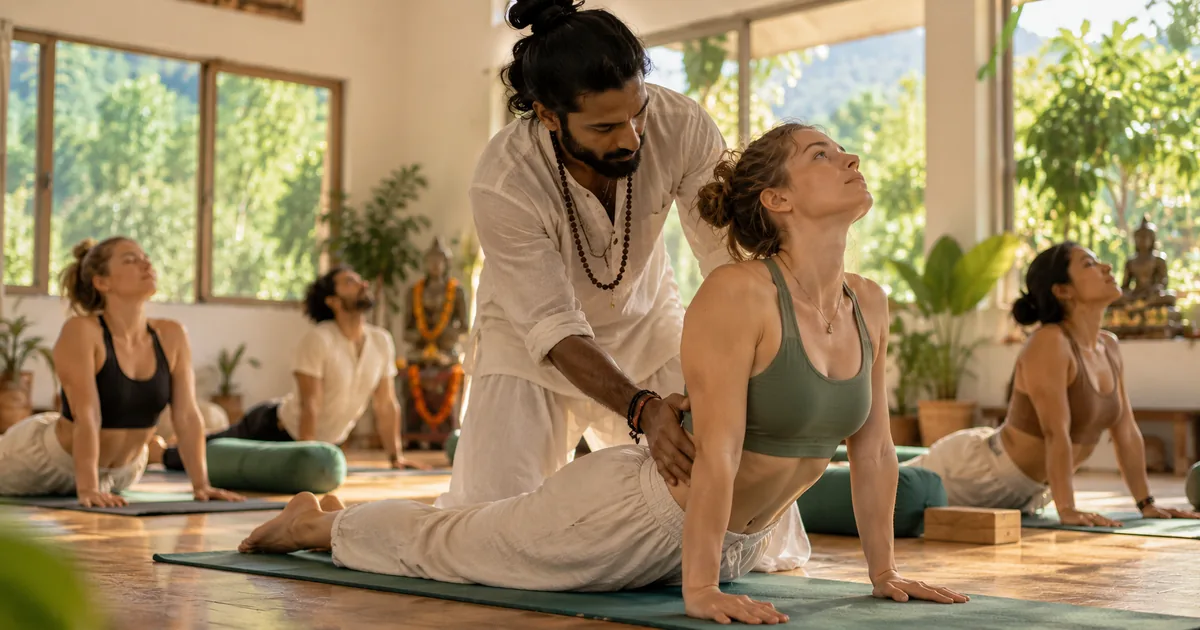
You can learn the shapes from an article. You cannot learn the alignment from one — nobody can see their own knee tracking inward or their lower back rounding. That is the entire argument for being in a room with a teacher who can correct you.
If you want to go properly into the mechanics, our 200 Hour Yoga Teacher Training in Rishikesh spends a substantial part of the month on exactly this, with yoga anatomy taught alongside so you understand why an alignment cue exists rather than just repeating it.
Related reading
This article is general information and not medical advice. If you are pregnant, injured or managing a health condition, speak to your doctor and tell your teacher before practising.