





Home › Blog › Yoga Teacher Training
Acro Yoga vs Aerial Yoga: What Actually Holds You Up
Table of Contents
The difference between acro yoga and aerial yoga is what holds you up. In acro yoga another person supports you. In aerial yoga a hammock does.
Quick answer: acro is a partner practice built on trust and communication; aerial is a solo practice built on a suspended fabric sling. They look similar in photographs and have almost nothing in common to practise.
The difference in one line
Both get you off the floor, and that is where the similarity ends. Acro yoga needs at least two people and ideally three — a base, a flyer and a spotter. Aerial yoga needs a rigged hammock and nobody else at all.
The confusion is understandable. Search either term and you get the same genre of photograph: somebody inverted, somebody looking serene, a lot of sunlight. The practices behind those photographs ask completely different things of you.
Side by side
- What supports you — acro: another person's feet or hands. Aerial: a fabric hammock suspended from the ceiling.
- People needed — acro: two to three. Aerial: one.
- Equipment — acro: a mat. Aerial: a rigged hammock, which is why you cannot really do it at home without installing one properly.
- Main skill — acro: communication and trust. Aerial: grip, core control and getting used to being upside down.
- Biggest obstacle — acro: fear of being dropped, and finding a reliable partner. Aerial: fabric burn on the backs of the knees, and vertigo in the first few inversions.
- Therapeutic use — acro: spinal decompression in therapeutic flying. Aerial: spinal decompression hanging in the hammock, which you can do alone and for longer.
- Practise it alone? — acro: no. Aerial: yes, and that is its real advantage.
What acro yoga is good for
Acro teaches you things a solo practice cannot, because the hard part is never physical.
Flying asks you to stop managing and let somebody else hold you, which a lot of people find genuinely difficult. Basing asks you to stay steady and reassuring while someone above you is frightened. Both translate directly into teaching — it is the same skill as putting hands on a nervous student and being trusted.
It is also the most social thing in yoga. You cannot do it alone, which is a limitation and the whole point at the same time.
What aerial yoga is good for
Aerial's advantage is that the hammock is patient. It does not get tired, it does not need its own practice, and it will hold you in an inversion for as long as you want.
That makes it the better of the two for spinal decompression and for people building towards inversions, because the fabric takes the weight off your wrists and neck entirely. It is also kinder if you have a shoulder you are protecting, since you can choose exactly how much to load.
Our Aerial Yoga Teacher Training is a seven-day residential course that takes you from a first time in the hammock to leading a class, running from the 24th to the 30th of every month, at ₹17,999 shared or ₹21,999 private.
Which should you learn first?
- You have a regular practice partner → acro. It costs nothing but a mat and the progression is fast when two people commit.
- You practise alone → aerial. Acro without a partner is a non-starter, however much you like the look of it.
- You want spinal decompression → aerial, because the hammock holds you for minutes rather than seconds.
- You are working on fear, trust or teaching skills → acro, every time.
- You have a wrist, shoulder or neck injury → aerial, and only with a teacher who knows about it. Avoid acro lifts entirely until it is healed.
- You are pregnant → neither, without clearing it with your doctor first. Our prenatal and postnatal training covers what is appropriate instead.
If you want to teach one
This is where they separate sharply.
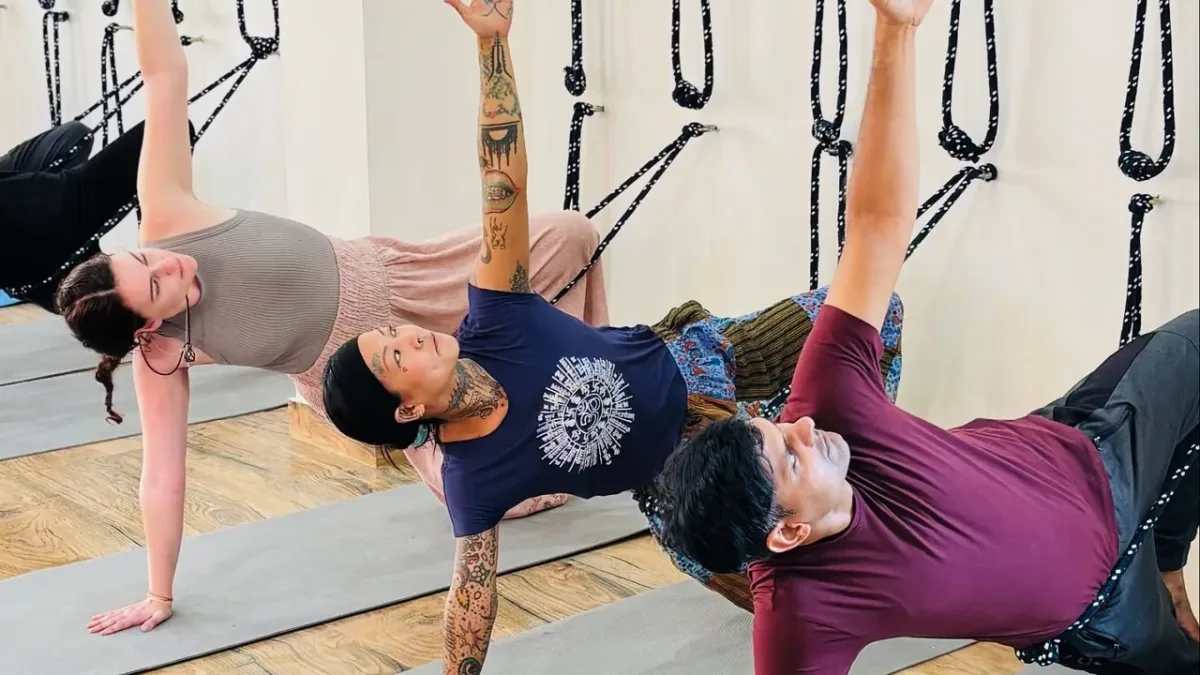
Aerial has a clear teaching pathway. There are recognised certifications, studios hire for it, and there is a rigging and safety component you genuinely cannot improvise. A seven-day intensive is a realistic route in.
Acro has no equivalent standard. It is taught in workshops and jams rather than certifications, and there is no widely recognised credential. That does not make it less valuable — it makes it a skill you add to your teaching rather than a qualification you sell.
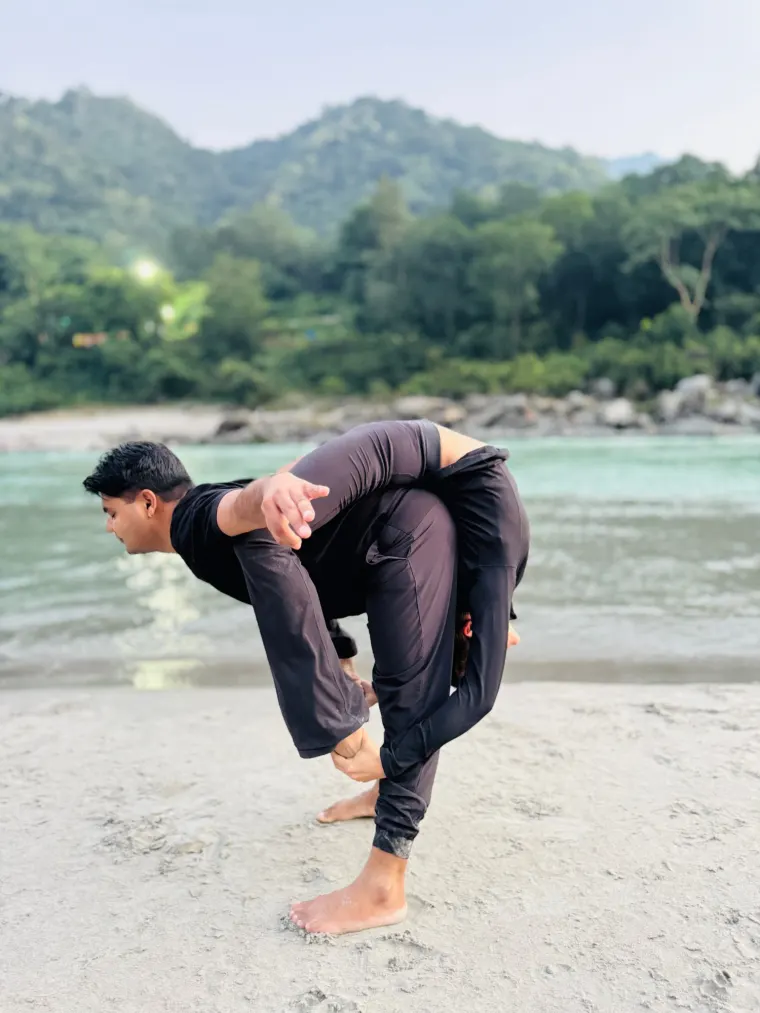
Which is why we treat them differently: aerial is a standalone course, and acro runs as a complimentary partner-practice session inside every teacher training, on the sand by the Ganga.
Bottom line
Acro yoga is held up by a person and aerial yoga by a hammock. Choose acro if you have a partner and want to work on trust, communication and hands-on teaching skills; choose aerial if you practise alone, want spinal decompression, or want a teaching qualification with a clear pathway.
You can meet both here. Acro is included on the 200 Hour Yoga Teacher Training — 24 days from ₹18,999, all-inclusive — and aerial has its own seven-day course. Tell us what you are after and we will say which fits, including when the answer is neither.
Frequently Asked Questions
What is the difference between acro yoga and aerial yoga?
What holds you up. In acro yoga another person supports you, so you need two or three people; in aerial yoga a fabric hammock suspended from the ceiling supports you, and you can practise alone. They look similar in photographs and are very different to practise.
Which is better for beginners, acro or aerial yoga?
Aerial if you practise alone, because acro without a reliable partner is a non-starter. Acro if you have a regular practice partner, since it costs nothing but a mat and progress is fast when two people commit.
Is aerial yoga good for back pain?
The hammock is well suited to spinal decompression because it takes the weight off your wrists and neck entirely and will hold an inversion for minutes rather than seconds. Clear any existing back or disc condition with a doctor first, and tell the teacher before the class.
Can you get certified to teach acro yoga?
Not in the way you can for aerial. Aerial yoga has recognised certifications and a rigging and safety component studios hire for. Acro is taught through workshops and jams with no widely recognised credential, so it is a skill you add to your teaching rather than a qualification you sell.
Do you need equipment for acro yoga?
Only a mat, and ideally grass or sand underneath. Aerial, by contrast, needs a properly rigged hammock, which is why it is difficult to practise at home without installing one correctly.