






Home › Blog › Yoga Benefits & Health
Why Most Yoga Beginners Quit in 3 Weeks (And the Fix)
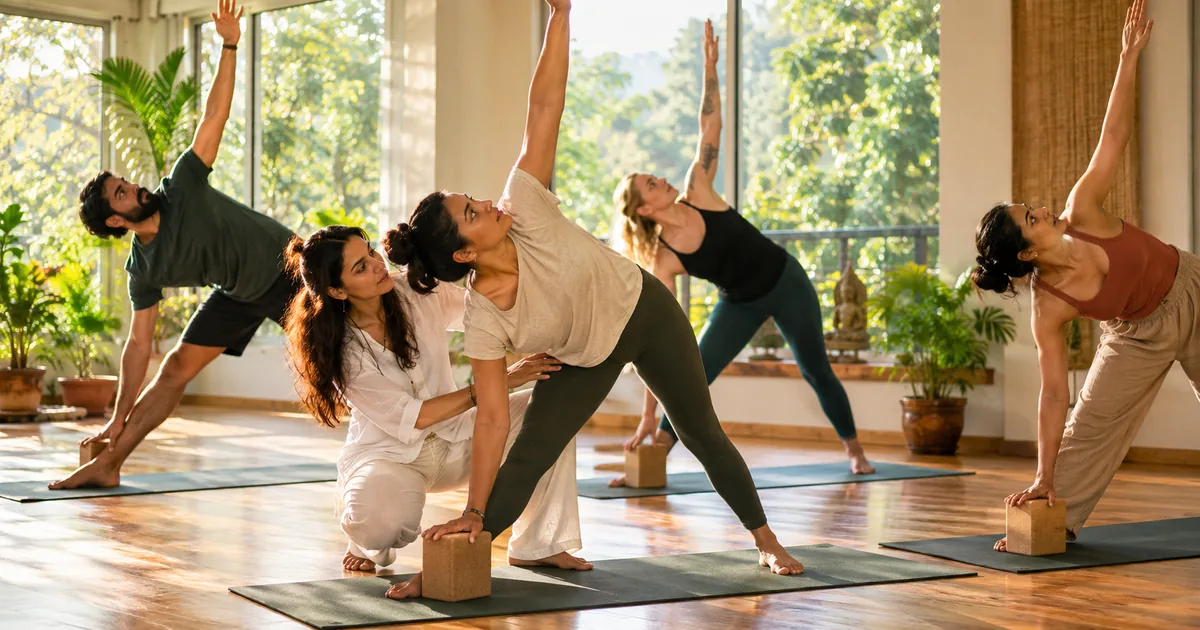
Table of Contents
Most people who start yoga stop within a month. Not because it is too hard, and not because they stopped caring — but because of a handful of small, fixable things nobody warns them about in the first class.
If you are thinking about starting, this is the honest version of what yoga for beginners actually involves, written by people who watch new students arrive every month and can predict almost exactly where they will struggle.
Why beginners quit (it is not what you think)
Four reasons account for nearly all of it.
They picked the wrong first class. A fast vinyasa or hot yoga class is a terrible introduction. You spend an hour confused and sore and conclude that yoga is not for you. What you actually concluded is that that class was not for you.
They measured the wrong thing. Week three arrives, the toes are still out of reach, and it feels like nothing is happening. Flexibility is the slowest thing yoga changes. Sleep, breathing and mood shift far sooner — but only if you are looking at them.
They went too often, too soon. Six classes in the first fortnight, then an aching back, then nothing for a month. Two or three times a week sustains. Daily, from a standing start, usually does not.
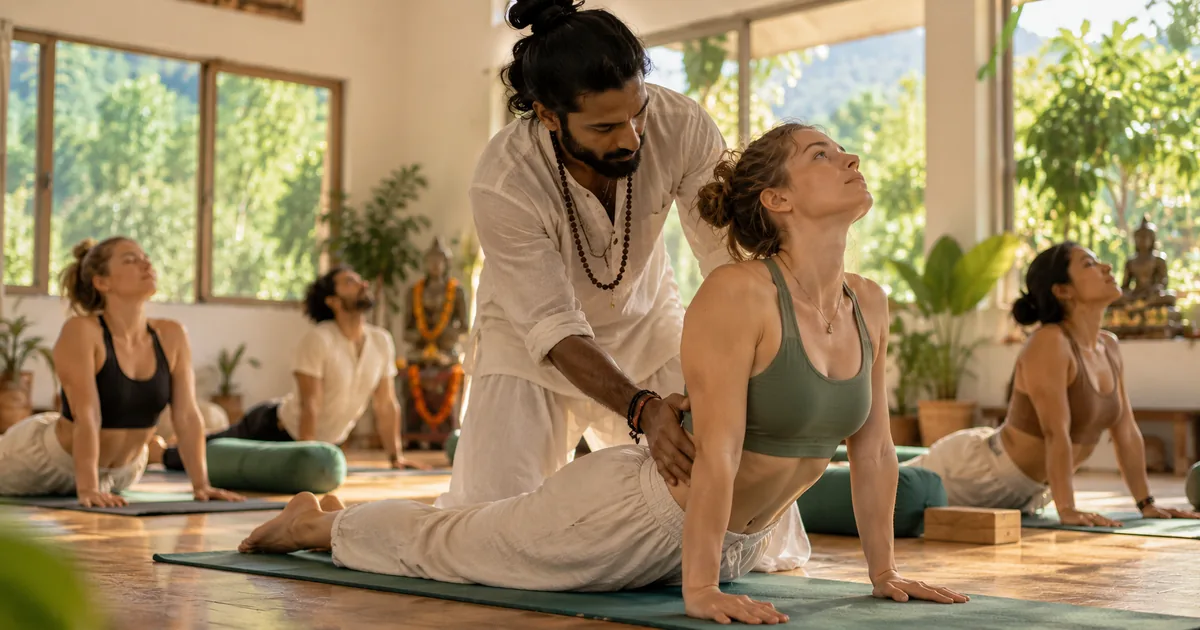
Nobody corrected them. In a crowded class you repeat a misalignment forty times until something complains. One correction in week one prevents it.
What to know before your first class
- You do not need to be flexible. This is the single most common reason people delay starting, and it is backwards — flexibility is the result, not the entry fee.
- Start with Hatha. Slower, held postures, time to understand what you are doing. Hatha is the foundation most other styles are built on.
- Tell the teacher it is your first class. Thirty seconds that changes the whole hour.
- Eat two to three hours before, not twenty minutes.
- The breath is the practice. If you are holding your breath in a posture, you have gone too far into it. That is the only rule that really matters at the start.
Five asanas worth learning properly first
Not the impressive ones. The ones everything else is built from.
- Tadasana (Mountain Pose) — looks like standing still, teaches you where your weight actually sits.
- Adho Mukha Svanasana (Downward Dog) — you will do this hundreds of times. Worth getting right once.
- Balasana (Child's Pose) — your rest position. Knowing you can take it at any moment is what lets beginners stop panicking.
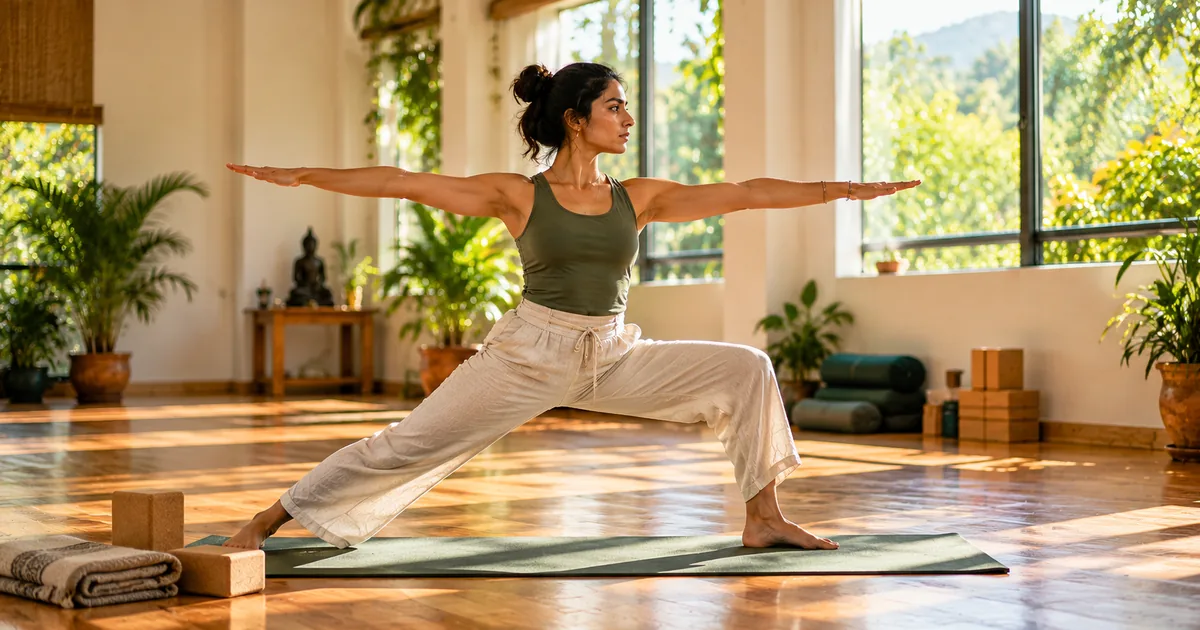
- Virabhadrasana II (Warrior II) — builds the leg strength that makes everything else accessible.
- Savasana — the hardest one. Lying still is where the nervous system does the work.
We go through these in far more detail in our guide to asanas for strength, flexibility and inner calm.
What actually changes, and when
Rough, honest timeline from what we see in students:
- Week 1–2: You sleep better. Almost everyone notices this first, and almost nobody expects it.
- Week 3–4: Breathing is calmer under stress. Balance improves noticeably.
- Week 6–8: Strength, particularly in the legs, shoulders and the whole core region.
- Month 3+: Flexibility. The thing you were waiting for arrives last.
What you actually need (almost nothing)
The industry would like to sell you a great deal of equipment. Here is the honest list.
- A mat. The one thing worth owning. A cheap thin mat slides and hurts your knees; a mid-range 4–5mm mat lasts years.
- Clothes you can fold forward in. Test them at home before you test them in a room full of people.
- Two blocks, eventually. Not a sign of weakness — they bring the floor closer so your alignment can be correct while your flexibility catches up.
- Nothing else. No special clothing, no app subscription, no props you saw online.
You practise barefoot, so there are no shoes to buy either. Most studios and every school here will lend you a mat for a first class.
When you are ready for more
Plenty of people who come to a yoga teacher training never intend to teach. They come because a month of structured practice does in four weeks what two years of weekly classes does not. If that is where you are heading, our 100 Hour Yoga Teacher Training is the usual starting point, and no previous training is required.
Related reading
This article is general information and not medical advice. If you are pregnant, recovering from injury or managing a health condition, speak to your doctor before starting.