






Home › Blog › Yoga Teacher Training
German Students in Rishikesh: What Nobody Tells You
Table of Contents
Every January a particular kind of email lands in our inbox. It is written in careful English, it lists three schools the sender is comparing, and it asks about insurance, visas and whether the food is really vegetarian. Nine times out of ten, it is from Germany.
Germans are among the largest European groups doing yoga teacher training in Rishikesh, and they arrive better prepared than almost anyone. But the thing that brings them here is rarely the thing the brochures advertise — and the mistake that costs them most is one they make before they ever board the plane.
Why so many Germans end up in Rishikesh
Germany has a mature yoga market and a shortage of affordable training. A 200 hour yoga teacher training in Berlin or Munich is commonly spread over eight to twelve months of weekends, and the fee rarely includes somewhere to sleep or anything to eat. Doing the same hours residentially in Rishikesh often costs less than the tuition alone back home, and it is finished in under a month.
That is the practical reason. It is not the reason most people give when they leave.
The weekend format in Europe means you practise, then drive home, then return to work, then come back a fortnight later having lost the thread. A residential yoga teacher training in Rishikesh India removes the commute, the inbox and the decision of whether to turn up. You wake at five because everyone wakes at five. That continuity is what people actually pay for, even if they booked on price.
The mistake almost everyone makes first
German students research thoroughly — and then book on the wrong criteria.
The usual sequence is: filter by price, filter by Yoga Alliance registration, read reviews, book. The trouble is that almost every school in Rishikesh is registered and almost every school has good reviews. Those two filters remove nothing. What they are left with is price, so they pick the cheapest — and a 200-hour course at €600 all-inclusive has to save money somewhere.
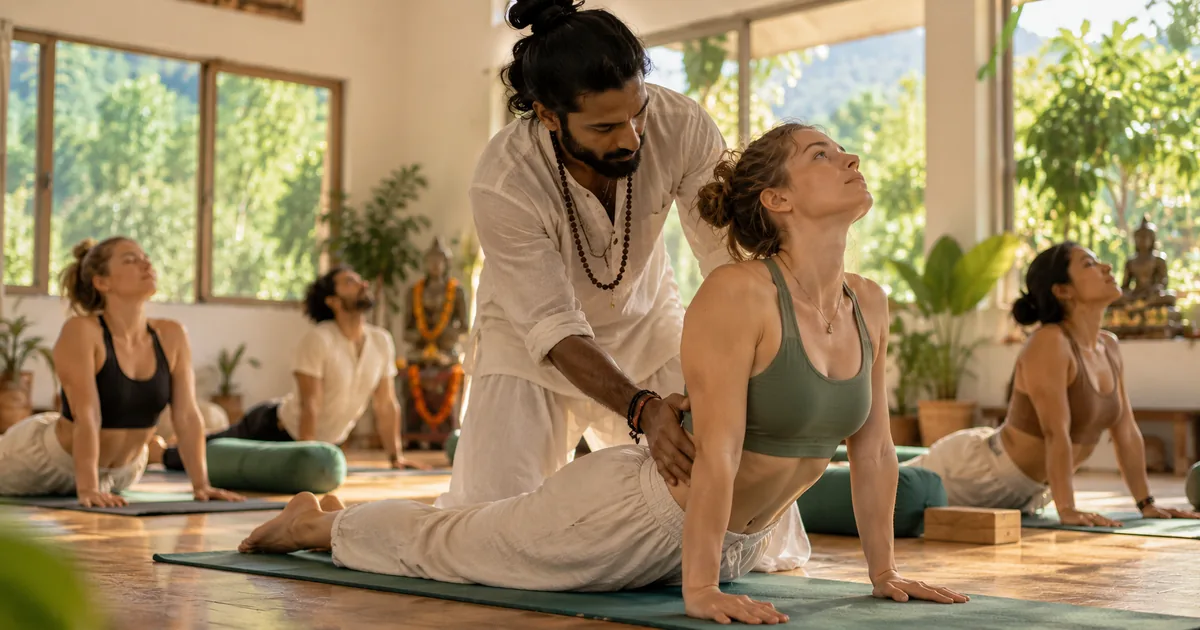
Usually it saves it on batch size. Thirty-five students in a hall, one teacher, no hands-on correction. You will finish, you will get a certificate, and you will not have been seen once in four weeks.
The questions worth asking instead:
- How many students per batch? Under twenty means a teacher can actually correct you. We cap ours at 15–20.
- Who teaches each subject? One teacher covering asana, philosophy and anatomy is a red flag. Each should be a specialist.
- How many teaching hours per day, honestly? Ask for the real timetable, not the marketing summary.
- Is the school registered, or is one teacher registered? They are not the same thing.
What genuinely surprises German students
Three things come up again and again in feedback.
The day is longer than expected. Not harder — longer. Practice starts before sunrise, and philosophy after dinner. People who train for marathons find the schedule easy and the stillness difficult.
Philosophy is not optional padding. Many arrive expecting asana with a bit of theory bolted on. By the second week it is usually the yoga philosophy and anatomy sessions people talk about at dinner. If you want to teach rather than demonstrate, this is the part that does it.
Nobody minds that you are not flexible. This is the single most common pre-arrival worry in emails from Germany, and it is misplaced. Flexibility is an outcome of training, not a prerequisite for it.
Visa, timing and the practical bits
German passport holders can apply for an Indian e-Tourist visa online, and a yoga teacher training taken as a student rather than for employment normally sits comfortably within it. Apply three to four weeks ahead; the process is straightforward but not instant. Check the current rules with the Indian mission before you book flights — requirements change, and we would rather you verified than took our word for it.
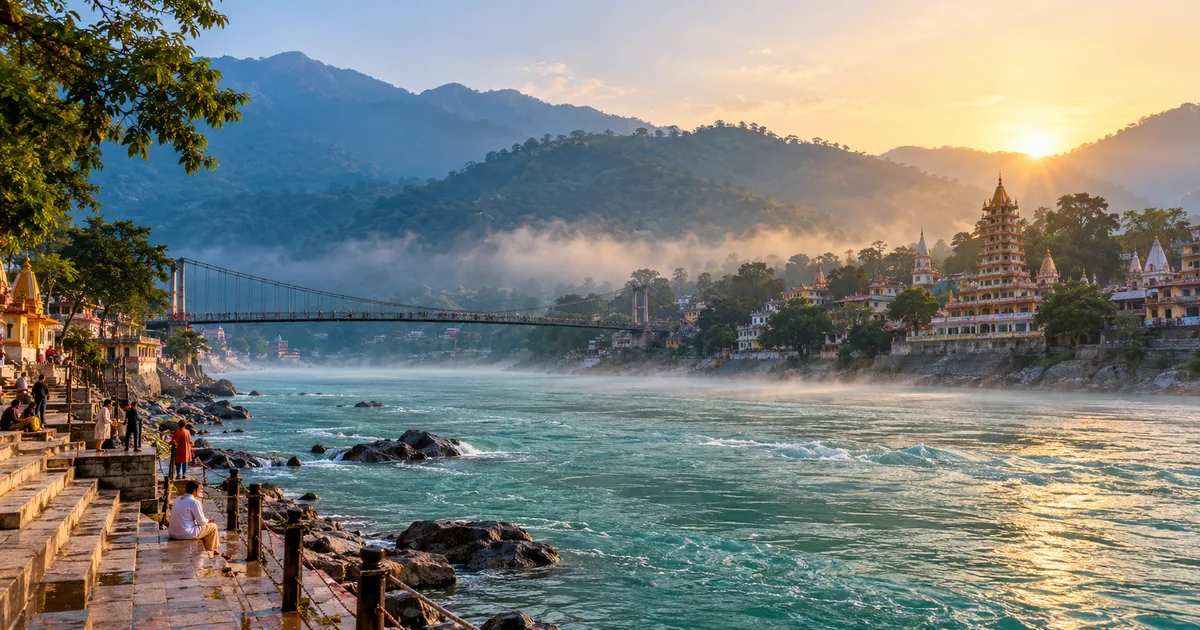
On timing: February to April and September to November are the months most Europeans choose. Rishikesh sits at the foot of the Himalayas, so the mornings are cold enough for a jumper and the afternoons are warm. June and July bring the monsoon, which some people love and some find relentless. December and January are genuinely cold in an unheated room.
Fly into Delhi, then take a domestic flight to Dehradun or the overnight train to Haridwar. The road transfer from Dehradun takes about an hour.
Choosing a school you have never seen
You are committing a month of your life and a few thousand euros to a place you can only judge through a screen. A few things make that less of a gamble.
Ask to speak to someone, not to a form. A school that will put you on a call with a coordinator before you pay is a school that expects you to have questions. Ask for the names of the teachers and look them up. Ask what happens if you get ill mid-course. And ask what the refund policy actually says, in writing.
If you are weighing up the foundation route first, our 100 Hour Yoga Teacher Training in Rishikesh is twelve days and exists precisely for people who want to test the water before committing to the full month. Most students go straight to the 200 Hour Yoga Teacher Training in Rishikesh, which is the qualification studios ask for.
Related reading
- Is Rishikesh still the yoga capital in 2026? — an honest look at what has changed
- About Rudra Yogpeeth — who teaches here and how we run a batch
This article is general information, not legal or medical advice. Confirm visa requirements with the Indian mission in your country, and speak to your doctor if you have a health condition.