






Home › Blog › Yoga Poses & Asanas
Partner Yoga Poses for Two People: Where to Start
Table of Contents
Partner yoga poses are postures practised by two people who use each other's weight, balance or resistance to do something neither could do alone. They range from a simple seated twist to one person fully supporting the other in the air.
Quick answer: start with ground-based poses where both partners keep contact with the floor — seated back-to-back breathing, a double forward fold, a standing counter-balance. Leave the lifted shapes until someone experienced can spot you.
What partner yoga actually is
Partner yoga is not a separate school of yoga. It is ordinary asana done with a second person as the prop: instead of a block or a strap, you use their hands, their back or their feet.
That changes two things. The pose goes deeper, because another body can take you further than your own effort will. And it stops being private — you have to communicate, which is why it is used so often as a trust and group-bonding practice rather than a workout.
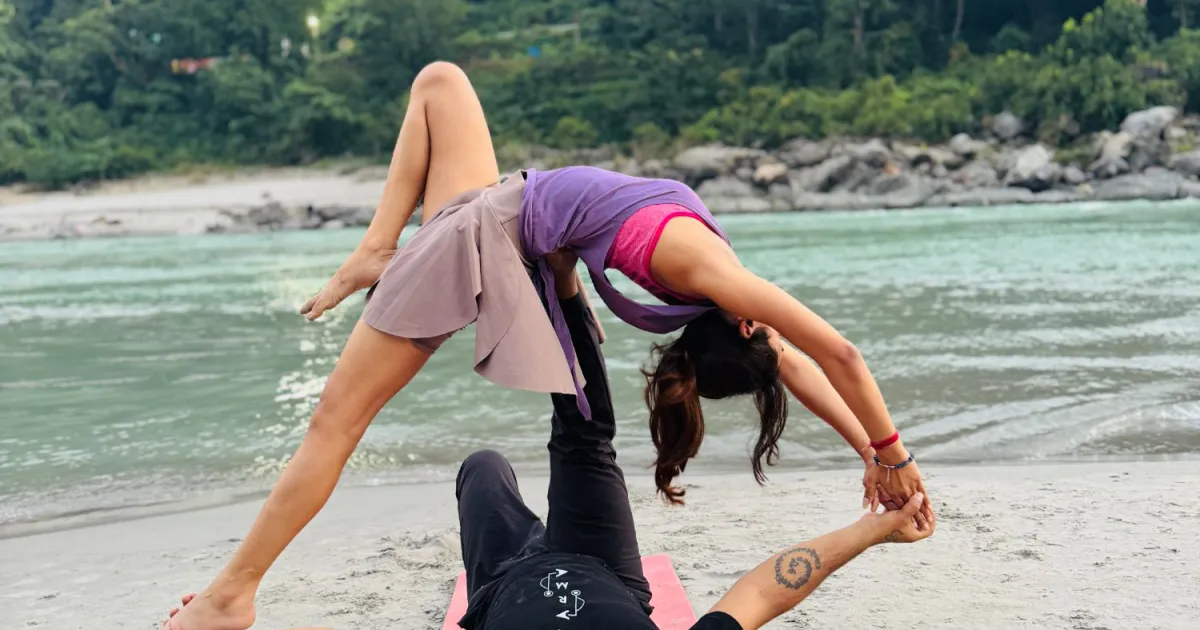
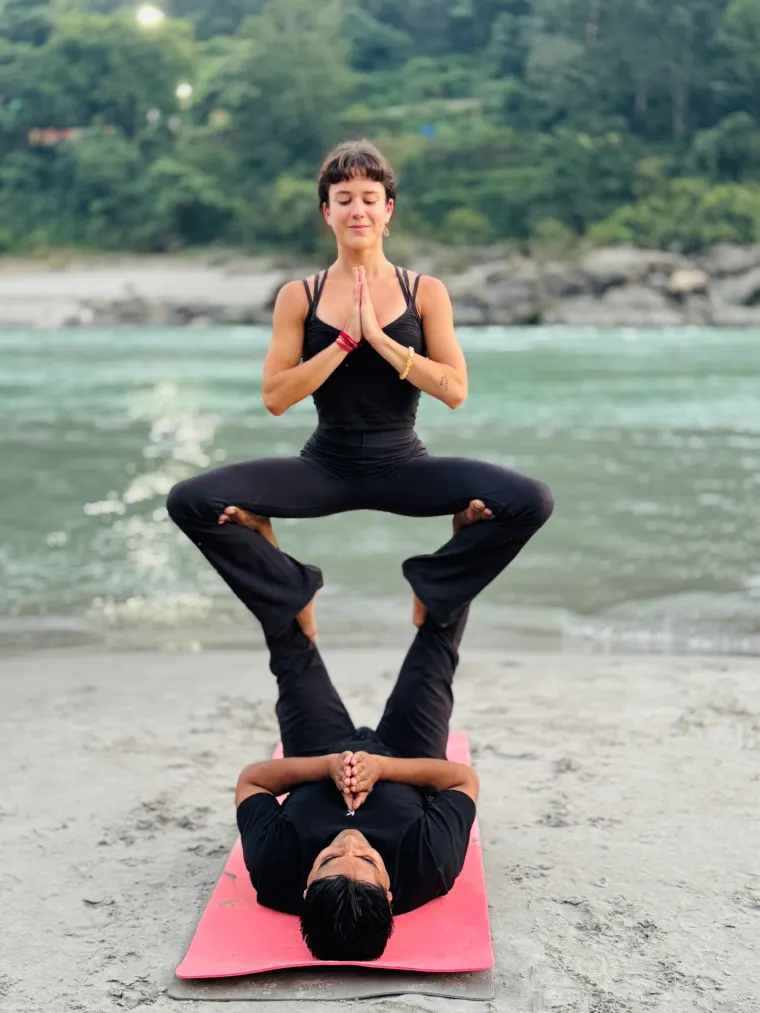
At the lifted end, partner yoga turns into acro yoga, where one person is fully supported off the ground. Everything below stays on the safer side of that line except the last pose.
Why two bodies work better than one
- You go further without forcing. A partner's gentle counter-pull opens a stretch your own muscles would resist, because the body relaxes when it is not doing the work.
- You cannot cheat. Alone you compensate without noticing. With a partner holding you, the compensation becomes obvious to both of you immediately.
- Breath gets contagious. Back-to-back, two people synchronise breathing within a minute or two without trying. It is the fastest way we know to settle a restless room.
- It makes you talk. "Too much", "a little more", "I'm coming out" — the vocabulary of safe adjustment, which is the same vocabulary a teacher needs.
Six partner yoga poses to start with
In rough order of difficulty. Both partners should be able to breathe normally and talk in every one of them.
- 1. Back-to-back seated breathing. Sit cross-legged, spines touching, and simply breathe. Notice when your rhythms meet. Two to five minutes. This is the one people dismiss and then remember.
- 2. Back-to-back twist. From the same position, both twist the same direction, each reaching for the other's opposite knee. The contact keeps the spine long instead of collapsing.
- 3. Seated forward fold and backbend. Sit facing opposite directions with soles of the feet planted. One folds forward while the other leans back over their partner's back. Then swap. One of you gets a hamstring stretch, the other a chest opener.
- 4. Double standing forward fold. Stand back to back, feet hip-width, both fold forward and clasp each other's forearms between the legs. Let the weight hang. Come up slowly and separately.
- 5. Standing counter-balance. Face each other, grip wrists, feet close together, and both lean back until your weight is held by the other. It only works if you both commit — hesitate and you both stumble, which is rather the point.
- 6. Supported fish over the back. One partner stands in a forward fold; the other lies back across their lower back and lets the chest open. This is where partner work starts carrying real weight, so read the safety section first.
The safety rules that matter
Partner yoga injures people in one of two ways: a lift that goes wrong, or a stretch pushed past where a body wanted to go. Both are avoidable.
- Agree a stop word before you begin. "Down" is better than "ow", because it is an instruction rather than a reaction.
- The person being stretched sets the depth. Never the one doing the adjusting. If you cannot hear them, you are too far away to be helping.
- Match sensibly, not by size. Weight matters less than steadiness. A calm lighter base beats a strong distracted one.
- Nothing overhead without a third person. A spotter is not optional for lifted shapes; they are the reason it is safe to try.
- Come out as slowly as you went in. Most partner-yoga strains happen on the exit, when someone lets go early.
- Skip the lifts if you are pregnant, have a disc issue, or have a shoulder or wrist injury, and tell your partner before you start rather than halfway through.
What goes wrong the first time
Almost always the same three things.
People stop breathing. Concentration does that. If you cannot hold a conversation in the pose, you are working too hard for a first attempt — back off a quarter.
One partner takes charge. Partner yoga done well is two people negotiating, not one arranging the other. If one of you is silent, the pose is not working even if it looks right.
Everyone reaches for the photogenic shape. The lifted poses are what circulate online, and they are the ones that need a spotter and a few sessions of groundwork first. The seated ones do more for your practice and nobody posts them.
Bottom line
Partner yoga is ordinary asana with a second body as the prop — it deepens stretches, exposes the compensations you hide when practising alone, and forces the communication a teacher needs. Start on the ground, agree a stop word, and leave the lifts until somebody can spot you.
We run acro and partner practice as a complimentary session on every teacher training, because it teaches the hands-on vocabulary faster than a classroom does. It is included in the 200 Hour Yoga Teacher Training in Rishikesh — 24 days, from ₹18,999 all-inclusive, with nothing charged after you arrive. Ask us about the next batch.
Frequently Asked Questions
What are partner yoga poses?
Partner yoga poses are ordinary yoga postures practised by two people who use each other as the prop, taking the place of a block or a strap. The second body lets a stretch go deeper than your own effort would allow, and it forces the two of you to communicate throughout.
What are the easiest partner yoga poses for beginners?
Start with poses where both people keep contact with the floor: back-to-back seated breathing, a back-to-back twist, a seated forward fold paired with a backbend, and a double standing forward fold. Leave anything lifted until someone experienced can spot you.
Do you need to be the same size to do partner yoga?
No. Steadiness matters far more than matching weight or height, and a calm lighter base is better than a strong distracted one. Size only becomes a real factor in lifted acro shapes, and even there it matters less than people expect.
Is partner yoga safe?
It is safe on the ground and needs care once anyone is lifted. Agree a stop word before you begin, let the person being stretched set the depth, never go overhead without a third person spotting, and come out of every pose as slowly as you went in.
Can you do partner yoga with no yoga experience?
Yes, for the seated and standing poses, which are more about breathing together than about flexibility. If you are completely new, a few weeks of ordinary practice first makes instructions like "engage your core" mean something.